
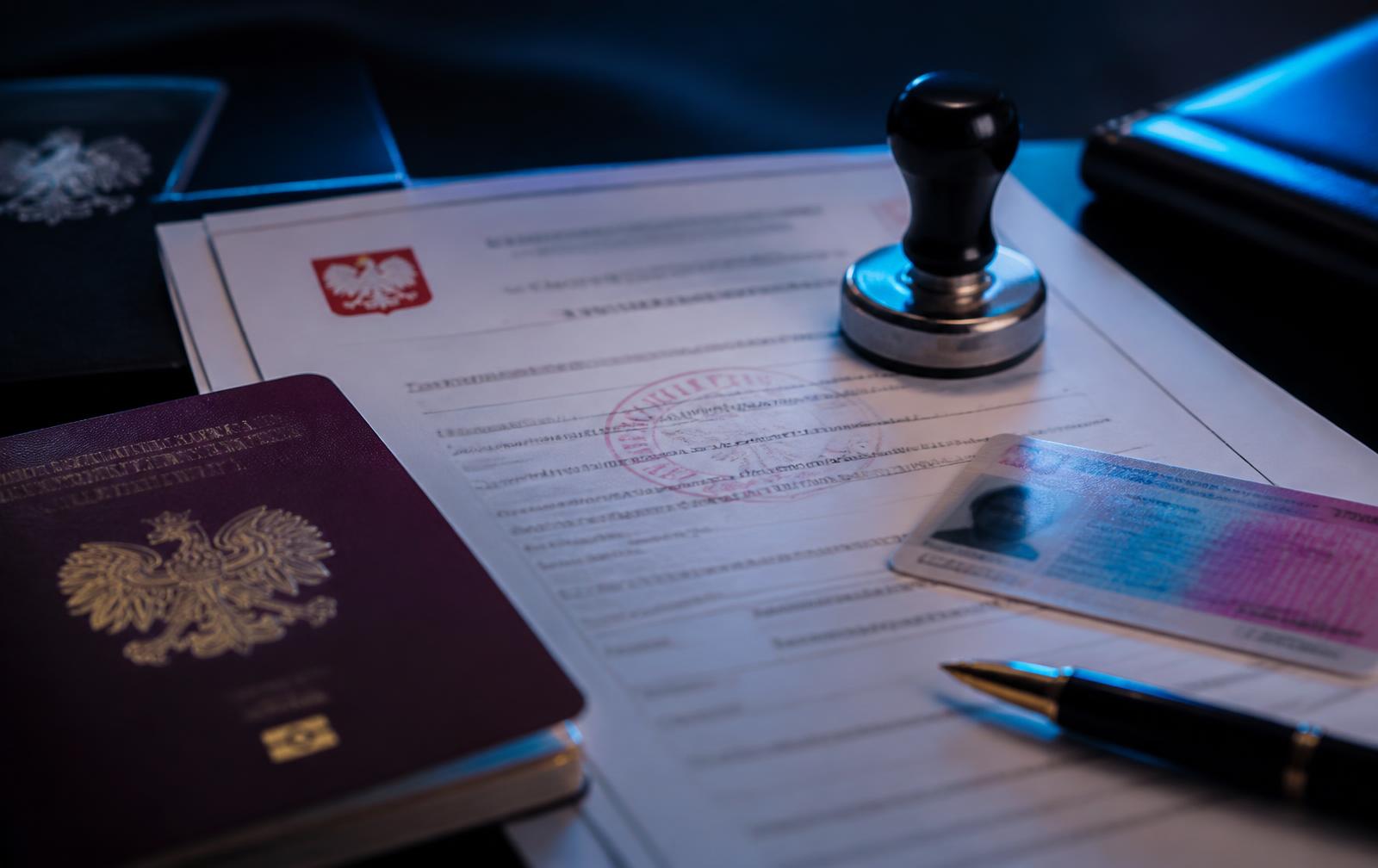
Type A work permit
We run the full type A work permit procedure for the employer: position analysis, complete documentation, the application to the voivode, official correspondence and collection of the decision. We track deadlines, renewals and the consistency of the contract with the permit, so that employing a foreign national is legal from day one.
- Application filed by us on the employer's behalf
- Full documentation and sworn translations
- Contact with the voivodeship office and replies to requests
- Calendar of renewals and reporting duties
- Type
- Type A work permit
- Authority
- Voivode competent for the company's seat
- Validity
- Up to 3 years, renewable
- Applicant
- The employer
- Pricing
- Flat rate per case
What a type A work permit is
A type A permit is a decision of the voivode allowing a non-EU national to legally work under a contract with an entity established in Poland. It is tied to a specific employer, position, working time and the minimum salary stated in the decision.
The employer applies
The party to the proceedings is the company entrusting the work, not the worker. It is responsible for the content of the application.
The voivode decides
The case is handled by the voivodeship office competent for the employer's seat or place of residence.
Work, not stay
The permit legalises work. Stay requires a separate basis: a national type D visa or a residence card.
Who this service is for
Companies hiring for the first time
You have a candidate from outside the EU and need someone to run the whole procedure instead of learning it through your own mistakes.
Plants hiring in groups
A dozen or several dozen applications at once, one timeline and one status report instead of scattered cases.
Employers with expiring permits
The decision is about to expire and you want to extend employment without a single day of break in legal work.
Companies after an inspection or before an audit
You need to put foreign workers' documentation in order and be sure every person works on the correct legal basis.
Work permit types A to E
Polish law provides for five permit types. Which one applies depends on who employs the foreign national and in what form the work is performed. For ordinary employment in a Polish company, type A is the right one.
Type A
Work under a contract with an entity whose seat or place of residence is in Poland. The most common case – ordinary employment in a Polish company.
Type B
Serving on the management board of a legal entity for a total period exceeding 6 months within 12 consecutive months.
Type C
Posting to a branch or establishment of a foreign entity in Poland for a period exceeding 30 days in a calendar year.
Type D
Posting by a foreign employer to provide a temporary and occasional service (an export service).
Type E
Posting for purposes other than those in types B, C and D, for a period exceeding 30 days within 6 consecutive months.
What exactly we do
We take over the entire formal layer – from checking whether type A is the right basis to tracking the renewal deadline of the decision.
Case and position analysis
We check whether type A is the correct basis and verify the position, occupation code, working time and salary level against the requirements.
Document collection
A document list for the employer and the worker, a correctness review, sworn translations and the power of attorney.
Filing with the voivode
We file with the office competent for the employer's seat – electronically or on paper, in line with that office's current practice.
Running the proceedings
We respond to requests to supplement documents, monitor case status and deal with the office on the employer's behalf.
Decision and implementation
We hand over the decision, a contract template consistent with the permit terms and a checklist of the employer's reporting duties.
Calendar and renewals
We track the validity of permits, visas and residence cards and remind you about renewals in advance.
What the application requires
The exact set depends on the position and the worker's situation, but the core list repeats. We collect and verify everything before filing.
On the employer's side
- Company registration data (KRS or CEIDG, NIP, REGON)
- Statement on the clean record of the entity entrusting work
- Position description: job title, duties, occupation code
- Terms of employment: contract type, working time, gross salary
- Power of attorney for the person handling the case
- Proof of payment of the application fee
On the worker's side
- Copy of a valid passport (data page)
- Documents confirming qualifications or experience
- Residence document, if the worker is already in Poland
- Personal data needed for the contract and registrations
- Sworn translations of foreign-language documents
How the permit is obtained
The model is the same for one application and for fifty – only the scale of document collection and the way statuses are reported change.
Consultation and analysis
We agree on the position, the candidate's country of origin, the planned start date and the correct legal basis.
Agreement and power of attorney
We sign the service agreement and the power of attorney that lets us represent the employer before the office.
Document collection
We gather documents from the company and the worker, review them and order sworn translations.
Filing the application
We file with the voivode competent for the employer's seat and confirm that the case has been registered.
Proceedings at the office
We monitor status, respond to requests and supplement documentation without involving your team.
Decision and start of work
We collect the decision, hand over the full set of documents and confirm from when work may legally begin.
How long it takes and how long it lasts
Processing time depends mainly on the workload of the specific voivodeship office and on the completeness of the application. We set realistic timelines based on the current practice of each region.
up to 3 years
Maximum period for which a type A permit is issued
approx. 1–3 months
Typical processing time, depending on the voivodeship office
90 / 30 days
Window for filing a renewal before the permit expires
The 2025 reform removes the labour market test and moves applications into an electronic system, which shortens document flow. Before each case we verify the current requirements of the competent office.
What the cost consists of
We quote before we start and do not change the price during the proceedings. Below is the full list of items that may appear in the calculation.
Application fee
Paid by the employer when filing the permit application; the amount depends on the permit type and the period it covers.
Stamp duty on the power of attorney
A one-off charge when the case is handled by a representative – one item per case, not per document.
Sworn translations
Required for foreign-language documents: diplomas, certificates, employment references. Cost depends on the number of billable pages.
Our fee for running the case
Agreed upfront as a flat rate per worker. No charges for correspondence, requests, office visits or supplements.
Changes in employment and reporting duties
The permit is tied to specific terms of employment. Some changes require a new decision, others only a notification – telling them apart protects the company from an allegation of illegal employment.
Requires a new or amended permit
A change of position or scope of duties, a salary reduction below the level stated in the decision, a change of working time and a change of employer.
Does not require a new decision
A change of the employer's name or legal form, a transfer of the workplace or part of it, and an increase in the worker's salary.
Must be reported to the voivode
The worker not taking up the job within the set deadline, or interrupting or ending work before the permit expires – within the statutory deadline.
Duties towards the worker
Handing a copy of the permit to the worker, concluding a contract consistent with the decision and presenting it in writing in a language they understand.
Renewal without a break in work
A renewal is a separate procedure, but it builds on documentation already collected. Timing is key: the application is filed no earlier than 90 days and no later than 30 days before the decision expires.
Advance reminder
We notify your HR team about the upcoming deadline several months before the permit expires.
Document refresh
We update company data, terms of employment and the worker's documents using the files from the earlier case.
Continuity of employment
An application filed on time allows work to continue until the voivode decides the case.
Where type A workers usually come from
We run cases for candidates from Asian markets that we recruit ourselves, as well as for workers our clients have found on their own.

Philippines
Production, logistics and processing – candidates experienced in shift work.

India
Technical staff, welders and machine operators with documented certifications.

Nepal
Blue-collar workers with low turnover who fit well into team work.

Bangladesh
Light industry, warehousing and food processing.

Sri Lanka
NVQ certificates, construction and manufacturing.

Indonesia
Production, HoReCa and logistics – candidates with verified qualifications.
The full residence track – national type D visas and residence cards – is covered in our residence and work legalisation service. If you also need candidates, see one-off recruitment or the temporary employment agency model.
Risks we remove upfront
Inspections by the National Labour Inspectorate and the Border Guard focus on a few recurring areas. We verify each of them before the worker starts.
Starting work before the decision
The costliest mistake. Work may only begin once the worker holds both legal stay and a valid permit. We set the start date only after both bases are in place.
Contract inconsistent with the permit
A different position, a lower salary or different working time than in the decision means work on terms inconsistent with the permit. We provide a contract template matching the decision.
Formal gaps in the application
A request to supplement documents can add several weeks. We verify completeness before filing, using a checklist for the specific office.
A missed renewal deadline
An application filed late means a break in legal employment. We keep the calendar and start the renewal well in advance.
What we guarantee
One case owner
The same person runs the analysis, the documents and the contact with the office – no handovers between departments.
Review before filing
Every application goes through a completeness check, which limits requests to supplement documents.
Fixed price per case
A flat rate agreed before we start, with no add-ons for correspondence, requests or office visits.
Deadlines under control
A validity calendar for permits, visas and residence cards, with reminders for your HR team.
Frequently asked questions about type A permits
What is a type A work permit?
It is a decision issued by the voivode allowing a foreign national to legally work under a contract with an entity established in Poland. The employer files the application, and the permit is tied to a specific employer, position, working time and salary. Type A is the most common permit type – it covers ordinary employment in a Polish company.
Who files the application – the employer or the worker?
The employer, meaning the entity entrusting the work, always files the application. The foreign national only provides personal documents: a passport copy, proof of qualifications and, if already in Poland, a residence document. We handle all correspondence with the voivodeship office on the employer's behalf under a power of attorney.
How long does it take to obtain a type A permit?
In practice from a few weeks to a few months – it depends on the workload of the specific voivodeship office and on how complete the application is. Straightforward cases are usually decided in about a month; in high-volume regions it takes longer. Most time is lost on requests to supplement missing documents, which is why we review every application before filing.
How long is the permit valid?
A type A permit is issued for a fixed term of up to 3 years and can be extended. The period stated in the decision matches the employment period declared in the application, so it is worth applying for the longest sensible horizon instead of repeating the procedure every year.
Is the labour market test still required?
The 2025 reform of the rules on employing foreign nationals removes the labour market test (the starosta's opinion) for work permits and moves case handling to an electronic system. Before every case we verify the current legal state and the requirements of the specific office, so that we neither file documents that are no longer required nor omit those that are.
How much does a type A work permit cost?
The cost consists of the fee paid by the employer when filing the application, a stamp duty on the power of attorney where applicable, and sworn translation costs. Our fee for running the case is agreed upfront as a flat rate per worker – with no charges for correspondence, office visits or supplements.
Is a type A permit enough for the worker to come to Poland?
No. The permit legalises work, not stay. A foreign national outside the Schengen area uses it to apply for a national type D visa (purpose 06) at a Polish consulate, and after arrival applies for a temporary residence permit when the visa period ends. We run both tracks in parallel within our legalisation service.
When does the permit need to be changed and when is a notification enough?
A change of position, a salary reduction below the level stated in the decision or a change of working time require a new or amended permit. A change of the employer's name or legal form, a transfer of the workplace or a pay rise do not require a new decision, but certain events – including the worker not taking up the job or ending the employment – must be reported to the voivode within the statutory deadline.
When should an extension application be filed?
An extension application is filed no earlier than 90 days and no later than 30 days before the current permit expires. Filing on time allows work to continue until the case is decided. We maintain a deadline calendar and remind you about extensions well in advance.
How does a type A permit differ from a declaration of entrusting work?
A declaration registered by the district labour office covers only nationals of selected countries and shorter employment periods. A type A permit covers nationals of all third countries and can be valid for up to 3 years. For workers from Asia – the Philippines, India, Nepal, Bangladesh, Sri Lanka or Indonesia – the type A permit is the right route.
What are the penalties for entrusting work without a permit?
Illegally entrusting work to a foreign national is an offence punishable by a fine, and since 2025 the sanctions and the inspection powers of the National Labour Inspectorate have been tightened. It can also result in being barred from employing foreign nationals for a period of time. That is why we set the start date only once the full set of documents is in place.
Do you handle cases for companies that recruit on their own?
Yes. We can run the permit procedure alone for candidates you have found yourself – with no recruitment on our side. We then take responsibility for documentation, contact with the voivodeship office and deadlines, while you decide on the worker and the terms of employment.
We will review your case.
We will get back to you within 48 hours with an assessment, a document list, costs and a timeline – with no commitment and no upfront fees.