
SENA diplomas after a practical exam
Técnico and Tecnólogo credentials issued by a state institution with an online register. We verify them with the issuer, add an apostille and provide sworn translations.

 Recruitment from Colombia
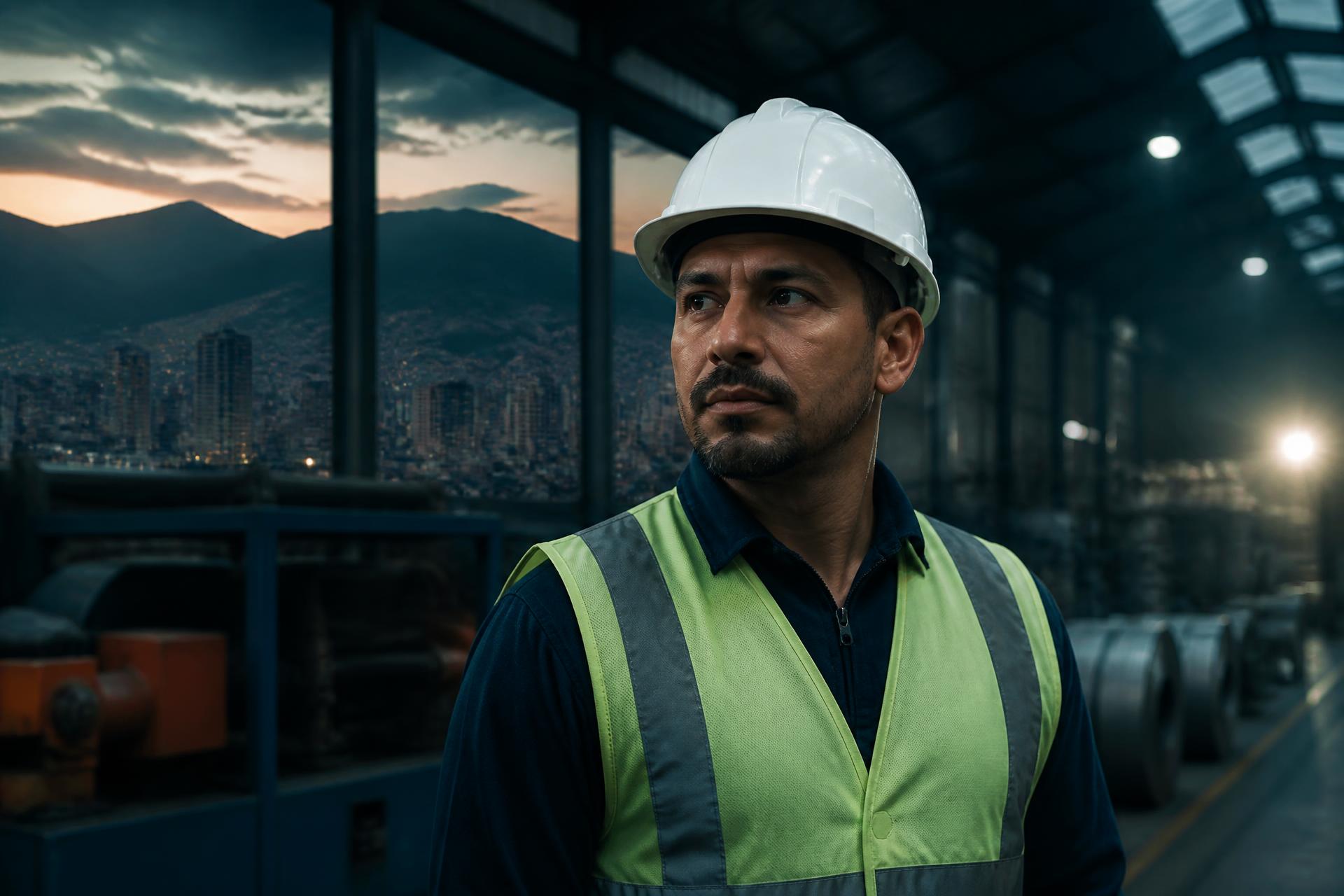
Colombia combines strong industry in Medellín and Bogotá, the region's largest vocational training system SENA, and a work culture very close to European. We run the whole process: recruitment and diploma verification, the labour market test, the type A permit, the national D visa at the Polish Embassy in Bogotá, plus relocation and onboarding in Poland.
Colombia · Latin America
Colombia has over 50 million inhabitants and, alongside Mexico, the most industrialised labour market in Latin America. Medellín and the Antioquia region mean textiles, metallurgy and machine building, Bogotá logistics, food industry and services, Barranquilla and Cartagena ports, petrochemicals and steel structures. A candidate from such a plant has shift work under a quality regime behind them, not just casual jobs.
The skills base comes from SENA – the state vocational training institution, one of the largest in Latin America, with centres in every department. Técnico and Tecnólogo diplomas follow a practical exam and plant placement, and their authenticity can be checked in the issuer's register. That is genuine credential verification, not a candidate's declaration.
Colombia stands out among non-European origins for its low cultural distance. The holiday calendar, family model, weekly rhythm and habit of formal employment are close to Polish ones, and candidates are used to contracted work with insurance. In practice that means a shorter adaptation period and less risk of friction within the team.
Formally the origin requires the full route: a labour market test, a type A work permit issued by the voivode and a national D visa filed at the Polish Embassy in Bogotá. Visa-free Schengen travel covers tourist stays only and does not replace a work visa. Documents are legalised by apostille, which shortens the paperwork stage. The realistic time from contract to the first day at work is 3 to 5 months.
3–5
months from contract to the first day at work
SENA
largest vocational system in the region
52 m
inhabitants and a deep candidate pool
100%
legal employment and residence
Other directions
We also recruit from Philippines, India, Nepal, .
See all directionsBenefits
Técnico and Tecnólogo credentials issued by a state institution with an online register. We verify them with the issuer, add an apostille and provide sworn translations.
A similar holiday calendar, family model and habit of formal employment. Adaptation within a Polish team is faster than with Asian or Middle Eastern origins.
Metallurgy and machine building in Medellín, food industry in Bogotá, petrochemicals and structures in Barranquilla. Candidates know shift work and quality control.
The oil and shipyard sectors produced a large pool of MIG/MAG and TIG welders and maintenance mechanics. This origin suits companies looking for specific credentials.
Colombia is the world's second largest cut flower exporter. Candidates from the Bogotá savanna and Antioquia know greenhouses, packhouses and cold stores under EU export regimes.
The whole crew shares a language, so a bilingual leader and Spanish instructions cover an entire shift. Simpler to organise than linguistically mixed groups.
Qualifications
Each candidate profile includes a scan of the SENA diploma with its verification number, an employment history with named companies, references, an assessment of Spanish and English, and – for technical trades – documentation of a practical skills test.
SENA diplomas and qualification levels
Técnico and Tecnólogo in welding, mechanical, electrical, logistics and catering trades. Every diploma carries a number verifiable in the issuer's register.
Experience in industrial plants
We verify work with named employers in Medellín, Bogotá, Cali and Barranquilla: metallurgy, machine building, food processing, construction and logistics. References are confirmed by phone.
Technical permits and optional practical test
Weld samples with photographic documentation and visual assessment in Colombia, machine tests for operators, and licence category plus route experience checks for drivers – all available only as optional paid add-ons on client request.
Language level and pre-departure prep
A video interview assessing Spanish and, where relevant, English, plus a basic Polish course with workstation vocabulary before departure.
The region of origin translates directly into a candidate's professional profile.
Medellín and Antioquia
The country's industrial heart: metallurgy, machine building, textiles and automotive. The best source of welders, metal fitters, operators and maintenance mechanics.
Bogotá and the savanna
The capital, logistics, food industry and the world's largest cluster of flower greenhouses. It also hosts the Polish Embassy handling national D visas.
Cali and Valle del Cauca
Agriculture and processing: sugar mills, fruit processing and food production. Candidates know sanitary regimes and shift work.
Barranquilla and Cartagena
Ports, petrochemicals and steel structures. Experience in industrial welding, assembly work and port logistics.
Bucaramanga and Santander
The base of the oil sector and industrial construction. Welders, pipeline fitters, electricians and maintenance staff.
Eje Cafetero – Pereira, Manizales, Armenia
The coffee region: agriculture, harvesting, packhouses and processing. High readiness to relocate and experience of intense seasonal work.
We run the process in five stages: consultation, quote and contract; recruitment and pre-selection in Colombia; labour market test and type A permit; apostille, translations and the national D visa in Bogotá; relocation and onboarding. Each stage has a clear deadline and a complete document set.
3–5 months
from contract to the first day at work
5 stages
one coordinator runs the whole process
100%
compliance with Polish and Colombian requirements
Etapy procesu
Needs analysis, role profile, quote and schedule. Once the contract is signed we start recruiting.
Consultation and needs analysis
Week 1We agree scope of duties, required credentials, pay and accommodation standard.
Quote and schedule
Week 1–2We present the full budget, stage deadlines and planned arrival batches – with Colombia flights are planned in groups.
Contract and job description
Week 2Contract signing and approval of the job description – the document also goes into the visa file.
Sourcing and verification in Medellín, Bogotá, Cali, Barranquilla and Bucaramanga – SENA diplomas, experience, language.
Candidate pre-selection
Week 2–6Our Colombian partner sources candidates and verifies SENA diplomas, plant experience and employer references.
Shortlist and video interviews
Week 4–7We present a documented shortlist. Interviews run in Spanish with interpretation, with your supervisor joining.
The governor's statement where required, plus the type A permit application at the voivodeship office.
Labour market test
Week 3–7Filing the vacancy with the district labour office and obtaining the governor's statement where required.
Decision: type A permit
Week 6–14Application at the voivodeship office; a decision usually takes 30 to 60 days depending on the region.
Apostille on diplomas, sworn translations, medicals, insurance and the visa application at the Polish Embassy in Bogotá.
Apostille and sworn translations
Week 10–16Apostille on SENA diplomas and certificates, sworn translations, medical checks and insurance.
Visa application in Bogotá
Week 12–20Booking the slot and filing the national D visa application at the Polish Embassy in Bogotá, including candidate travel from the regions.
Flight from Bogotá or Medellín, airport transfer, housing, PESEL, bank account and onboarding.
Tickets and transfer
Week 16–22Booking flights from Bogotá or Medellín, airport transfer and group pickup by the coordinator.
Housing and registration
First weekAccommodation meeting sanitary requirements, registration, PESEL application and opening a bank account.
Safety training and onboarding
First weekHealth and safety training in Spanish, workstation instructions, a team buddy and supervised first days.
Support and 90-day review
Month 1–3Ongoing contact with the coordinator, help with residence matters and a review after three months.
Typowy harmonogram
Od umowy do pierwszego dnia pracy – zwykle 3–5 miesięcy
Consultation, quote and contract
01Recruitment and pre-selection in Colombia
02Labour market test and type A permit
03Apostille, translations and national D visa
04Arrival and first day at work
05Koszty zatrudnienia
Polish administrative fees
EmployerType A work permit application and administrative charges at the voivodeship office.
Visa and service fee
Employer / agencyConsular fee for the national D visa, application handling in Bogotá and candidate travel from the regions to the capital.
Apostille and translations
Employer / agencyApostille on SENA diplomas and work certificates, sworn translations, medical checks and insurance.
Flight and relocation
EmployerAir ticket from Bogotá or Medellín, transfer, first accommodation and a starter kit including winter clothing.
Exams and permits in Poland
Employer / agencyFor welders, operators and drivers: EN ISO 9606-1 exam, UDT permits or licence exchange and initial qualification.
Agency fee
EmployerRecruitment, handling of the administrative and consular procedure, and coordinator support after arrival.
We do not quote a single price per worker – the budget depends on the role, headcount and region. With Colombia the transatlantic flight is the largest transport item, so arrivals are planned in groups rather than individually. Working in your favour is the apostille route instead of full consular legalisation, which makes the document stage shorter and cheaper. The two biggest schedule drivers are the voivode's decision time and visa slot availability in Bogotá – both are built into the quote from day one.
Gotowi do startu
Industries
This origin is chosen where specific technical credentials and fast team adaptation matter. Colombian plants operate in a model very close to European, so candidates are not learning production culture for the first time in Poland.
The oil sector in Santander plus shipyards and petrochemicals in Cartagena produced a large pool of MIG/MAG and TIG welders and structure fitters.
Metallurgy and machine building in Medellín and the food industry in Bogotá. Candidates know line work, output standards and quality control.
Large housing and infrastructure programmes in Bogotá and Medellín gave candidates experience on sites, in structures and in finishing works.
The ports of Cartagena and Barranquilla plus the capital's distribution centres provide a real base of warehouse staff and forklift operators.
The Bogotá savanna is the world's largest flower greenhouse cluster and Eje Cafetero the coffee region. Greenhouse, packhouse and cold store work for EU export.
Sugar mills and fruit processing in Valle del Cauca plus tourism in Cartagena and Medellín. Work under sanitary regimes and in international-standard kitchens.
If the shortest lead time is your priority, Georgia is faster. We choose Colombia where welding and technical credentials matter and you need a team that settles into the plant rhythm quickly.
Roles
This origin performs best in welding, industrial production, construction and greenhouse horticulture. For technical trades we run a practical skills test before any hiring decision.
Considering other origins? See also workers from Morocco, workers from Turkey or workers from the Philippines.
A comparison of typical differences in process and candidate profile.
| Criterion | Colombia | Other origins |
|---|---|---|
| Language | Spanish across the whole group, English with some candidates | English (Philippines, Uganda) or French (Morocco) |
| Candidate profile | Welding, manufacturing, maintenance, construction, greenhouses | More often general manual work or narrow specialisation |
| Legal basis | Type A permit and national D visa in Bogotá | PUP declaration (Georgia) or A + DOLAB (Vietnam) |
| Documents | Apostille under the Hague Convention – a shorter paperwork stage | Full consular legalisation for some origins |
| Cultural adaptation | Very fast – similar calendar, diet and work model | Longer induction period with Asian origins |
Cultural integration
Colombian teams settle in very quickly, but a few things are worth setting up from the start. Below are four points that in practice decide whether the first year runs without turnover.
Spanish versus Polish on the floor
This is the main challenge of the origin – English is not widespread. A bilingual crew leader, Spanish workstation instructions and a Polish course from the first month resolve it faster than most companies expect.
Climate and the first weeks
Bogotá has an even climate year-round and the coast is tropical – candidates have never experienced frost. A winter clothing pack on arrival and scheduling outside peak winter genuinely reduce drop-outs.
Food and meals
The diet is based on rice, beans, chicken, beef and arepa – close to Polish food in terms of substance and ingredients. Kitchen access after the shift is entirely enough, with no canteen menu changes.
Residence and banking formalities
Registration, PESEL, a bank account and the residence card application fill the first weeks. The coordinator books appointments and tracks deadlines so residence legality never lapses.
Short answers to questions about recruiting workers from Colombia.
Origin: ColombiaWe start with a conversation about your needs, a quote and a contract. Only then do we launch recruitment, the labour market test, the type A permit and the national D visa at the Polish Embassy in Bogotá.
Realistic time from contract to the first day at work: 3–5 months.