
Strong English
Official and teaching language across the entire education system. Safety training, work instructions and interviews need no interpreter – the strongest advantage over Asian origins.

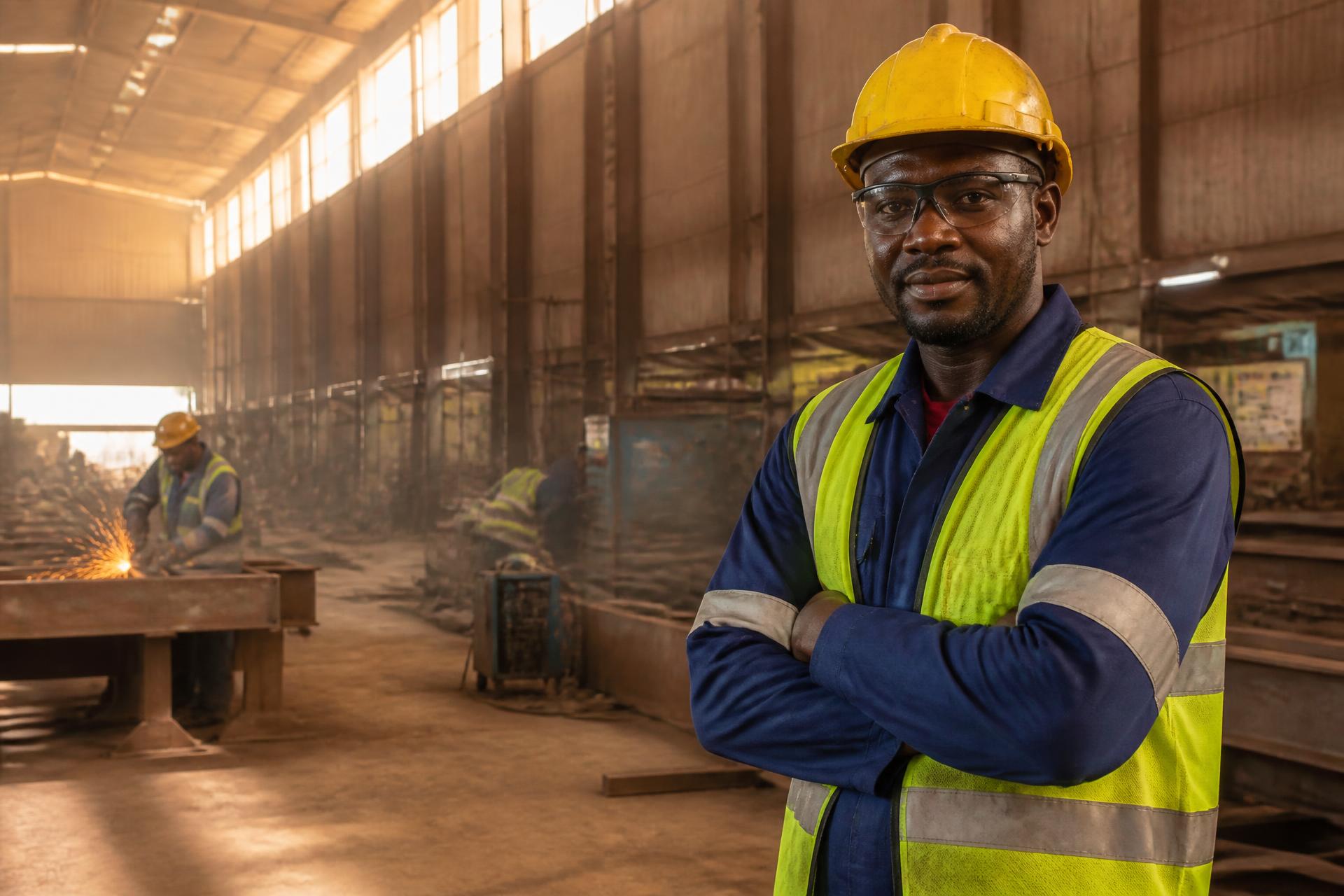
 Recruitment from Zimbabwe
We recruit production workers, welders, mechanics, builders and warehouse staff in Zimbabwe. English is the official language there, so training and shop-floor instructions need no interpreter. We run the whole process: sourcing, the labour market test, the type A permit, the visa, and arrival and onboarding at your company.
Zimbabwe · Southern Africa
Zimbabwe has decades of developed industry behind it: Bulawayo was the engineering and railway base of the entire region, Kwekwe and Redcliff mean steelmaking, Hwange coal mining, and Harare manufacturing, logistics and construction. Candidates enter the market with real workshop experience, not just a diploma.
The biggest advantage of this origin is the combination of language and craft. English is the official and teaching language from primary school onwards, and Zimbabwe has long recorded one of the highest literacy rates in Africa. A worker reads a technical drawing, a safety instruction and a quality procedure from day one.
We assess candidates on what can be checked: where and how long they worked, what they can do at the workstation, and what their previous employer confirms. For technical trades we arrange a practical skills test before any hiring decision.
Formally Zimbabwe requires the full path: a labour market test, a type A work permit and a national D visa. Poland has no embassy in Harare, so the visa application is filed with the Consular Section of the Polish Embassy in Pretoria, accredited to Zimbabwe. We plan this stage first, because it sets the schedule.
5–7
months from contract to first day at work
EN
English as the official and teaching language
48h
for a quote and candidate profiles
100%
legal employment and residence
Other directions
We also recruit from Philippines, India, Nepal, .
See all directionsBenefits
Official and teaching language across the entire education system. Safety training, work instructions and interviews need no interpreter – the strongest advantage over Asian origins.
Welders, fitters, turners, mechanics and electricians with real workshop and production practice. We verify skills with a practical task, not with a certificate alone.
Metal plants in Bulawayo, steelworks in Kwekwe, mining in Hwange and Zvishavane, manufacturing and logistics in Harare. Candidates know shift work, output norms and large teams.
Work certificates, diplomas and references are issued in English. That shortens sworn translation and lets us confirm the employment history directly with the former employer.
Labour migration to South Africa, the United Kingdom and the UAE is common in Zimbabwe. Candidates know what a contract, work discipline and life away from family mean.
We work exclusively with licensed partners and apply a zero candidate fee policy. This protects the employer's reputation and keeps the team stable throughout the contract.
Qualifications
The candidate profile includes employment history, references from previous employers, scans of the diplomas and certificates held, an English level assessment and – for technical trades – documentation of a practical skills test.
Work experience
We check which plants the candidate worked in, for how long and on what equipment. References are confirmed by phone with the previous employer – the strongest proof of skill.
Practical skills test
For welders, fitters and operators we arrange a practical task with photo documentation and assessment before departure, so you know what the candidate can really do.
Polytechnic diplomas and work history
Polytechnics in Harare, Bulawayo, Gweru, Kwekwe and Mutare train technicians and operators. We check employment at specific plants – steelworks, mines, railway workshops and construction firms – and confirm references by phone.
English level and optional practical test
A video interview assessing communication. For welders, fitters and operators, work samples with photographic documentation and visual assessment are available only as an optional paid add-on on client request.
The region of origin genuinely shapes the candidate's professional profile.
Harare and Mashonaland
The capital and largest labour market: manufacturing, construction, logistics, warehousing and services. The deepest pool of technicians, warehouse and production staff, plus the administrative base of the process.
Bulawayo and Matabeleland
The historic centre of heavy industry and railways. Welders, boilermakers, fitters and turners, mechanics and electricians with workshop background and real plant experience.
Kwekwe, Redcliff and Gweru
Steelmaking, metalwork and machinery in the Midlands region. Candidates used to continuous operation, furnace work and machining departments.
Hwange and Zvishavane
Coal, chrome and platinum mining. Heavy machinery operators, maintenance mechanics and workers with a strong safety culture carried over from mining.
Mutare and Manicaland
Timber industry, agricultural processing and cross-border logistics. Candidates experienced in sawmills, sorting plants and processing facilities.
We run the process in five stages: call, quote and contract; sourcing and pre-selection in Zimbabwe; labour market test and type A permit; documents and the national D visa in Pretoria; relocation and onboarding. Each stage has a clear deadline and a full document set.
5–7 months
from contract to first day at work
5 stages
one coordinator runs the whole process
100%
compliance with office and consular requirements
Etapy procesu
Needs analysis, role profile, quote and schedule. Sourcing starts once the contract is signed.
Call and needs analysis
Week 1We agree the scope of duties, required qualifications, pay and accommodation standard.
Quote and schedule
Week 1–2We present the full budget, stage deadlines and planned arrival batches, factoring in appointment availability in Pretoria.
Contract and job description
Week 2Signing the contract and approving the job description in English – the document is also used in the visa application.
Sourcing and verification in Harare, Bulawayo, Gweru and Mutare – experience, references, English level and, on client request, an optional practical test as a paid add-on.
Candidate pre-selection
Week 2–6A licensed partner sources candidates, confirms their employment history and collects plant references.
Shortlist and video interviews
Week 5–8We present a documented shortlist. Interviews are held in English, without an interpreter, with your supervisor taking part.
The governor's statement where required, and the type A permit application at the voivodeship office.
Labour market test
Week 3–7Submitting the vacancy to the district labour office and obtaining the governor's statement where the role requires it.
Decision: type A permit
Week 6–16Application at the voivodeship office; the decision usually takes 30 to 60 days depending on the region.
Sworn translations, document legalisation, medical checks, insurance, e-Konsulat appointment booking and the candidate's travel to Pretoria.
Legalisation and document translation
Week 12–18Sworn translations of work certificates and diplomas, document legalisation, medical examinations and insurance.
Appointment and visa application in Pretoria
Week 16–28Booking the slot in e-Konsulat, arranging the candidate's travel from Harare to Pretoria and filing the national D visa application.
Flight, airport transfer, accommodation, PESEL, bank account and onboarding on the job.
Tickets and transfer
Week 24–30Booking the flight from Harare or Johannesburg, airport transfer and group pick-up by the coordinator.
Accommodation and registration
First weekHousing meeting sanitary requirements, residence registration, PESEL application and opening a bank account.
Safety training and onboarding
First weekSafety training in English, workstation instructions, a buddy in the team and first days under supervision.
Support and 90-day review
Month 1–3Ongoing contact with the coordinator, support with residence matters and a review of the cooperation after three months.
Typowy harmonogram
Od umowy do pierwszego dnia pracy – zwykle 3–5 miesięcy
Call, quote and contract
01Sourcing and pre-selection in Zimbabwe
02Labour market test and type A permit
03Document legalisation and D visa in Pretoria
04Arrival and first day at work
05Koszty zatrudnienia
Official fees in Poland
EmployerType A work permit application and administrative fees at the voivodeship office.
Visa fee and travel to Pretoria
Employer / agencyConsular fee for the national D visa plus the candidate's travel and stay in South Africa to file the application and collect the passport.
Legalisation and translations
Employer / agencySworn translations of work certificates, diplomas and statements, document legalisation, medical checks and insurance.
Flight and relocation
EmployerAir ticket from Harare or Johannesburg, transfer, initial accommodation and a starter kit including winter clothing.
Exams and certifications in Poland
Employer / agencyFor welders, operators and drivers: EN ISO 9606-1 exam, UDT certification or licence exchange and initial qualification.
Agency fee
EmployerSourcing, handling the administrative and consular procedure, and coordinator support after arrival.
We do not quote a single price per worker – the budget depends on the role, headcount and region. It always consists of the same items, so agency offers can be compared without hidden costs. For Zimbabwe one factor drives both schedule and budget: there is no Polish embassy in Harare, so the visa application must be filed in Pretoria. We build that into the quote and the travel plan from day one.
Gotowi do startu
Industries
Choose this origin when you need technical craft and autonomy on the job. English by default means candidates move quickly into procedures, documentation and machine operation.
The metal plants of Bulawayo and the Midlands steelworks are the base for welders, boilermakers and fitters. Technical drawings and quality procedures in English need no translation.
Mechanics and electricians from mines, steelworks and railway workshops. Continuous operation, fault diagnosis and scheduled servicing are everyday work for them.
Candidates from construction sites in Harare and Bulawayo: structures, finishing, electrical and sanitary installations. They understand schedules, documentation and safety requirements.
The Harare–Beira–Johannesburg transport corridor is a real base of warehouse staff, forklift operators and drivers working with WMS systems in English.
Zimbabwe is a commercial farming country – tobacco, maize, citrus and export horticulture. Candidates know greenhouses, harvesting, sorting and machine work in the field.
Food processing plants and hotels serving tourism around Victoria Falls. International standards and confident English communication.
If the shortest lead time is your priority, Georgia is faster, and Kenya offers a simpler consular path. We choose Zimbabwe where workshop qualifications and English are decisive.
Roles
This origin performs best in technical roles: welding, metalwork, maintenance and machine operation. For those trades we can arrange an optional practical test as a paid add-on on client request.
Considering other origins? See also workers from Kenya, workers from Uganda or workers from the Philippines.
A comparison of typical differences in the process and candidate profile.
| Criterion | Zimbabwe | Other origins |
|---|---|---|
| Language | English official and taught – no interpreter | Conversational English (Philippines) or a crew leader needed |
| Candidate profile | Technical trades: welding, metalwork, maintenance | More often mass production and support roles |
| Legal basis | Type A permit and national D visa | Declaration at the labour office (Georgia) or A + DOLAB (Vietnam) |
| Consular post | Polish Embassy in Pretoria – candidate travels to South Africa | Embassy in the country of origin (Nairobi, Manila, New Delhi) |
| Process time | 5 to 7 months | 3 to 6 weeks (Georgia) or 4 to 6 months (Kenya) |
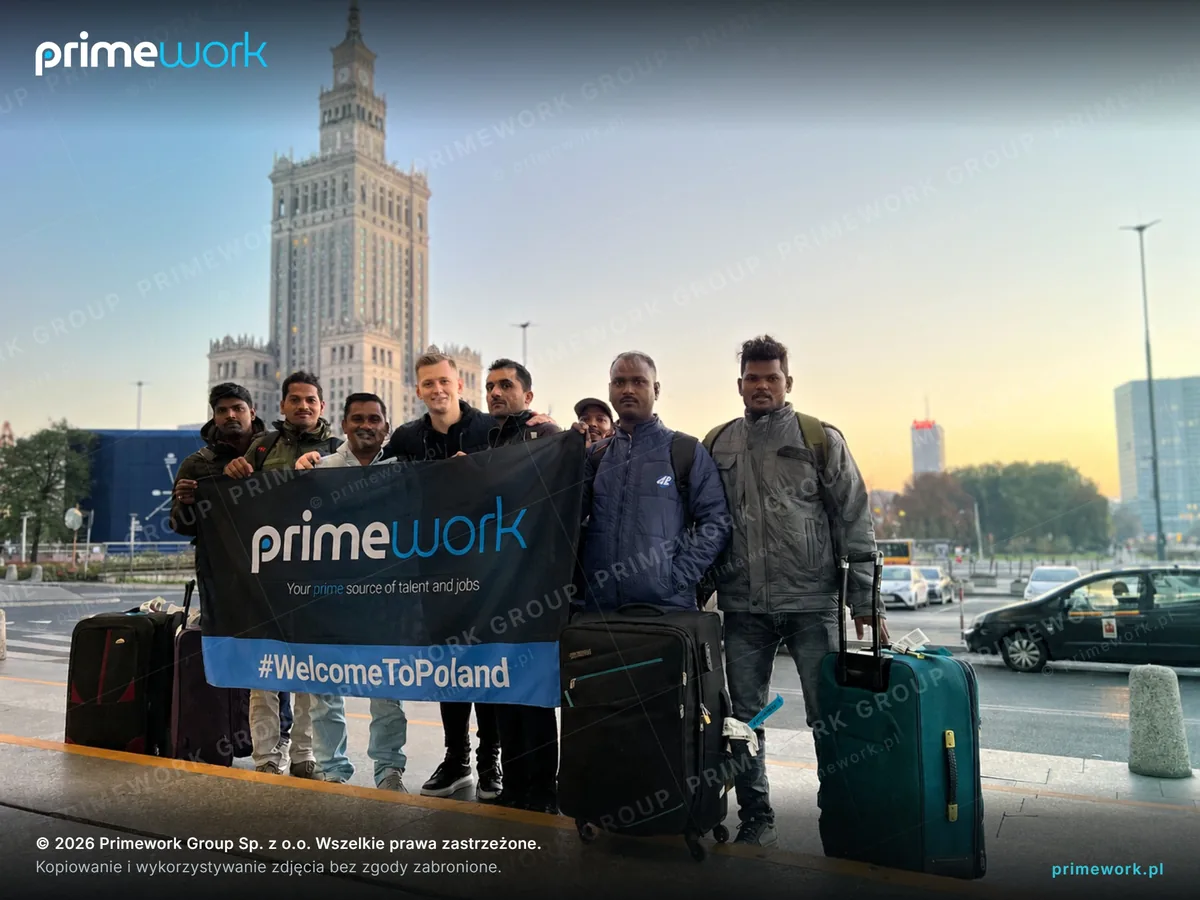
Cultural integration
Teams from Zimbabwe settle in quickly thanks to language and work culture, but a few things are worth setting up at the start. Below are four factors that in practice decide whether the first year passes without turnover.
Climate and the first weeks
Zimbabwe sits on a highland plateau with a mild climate – sub-zero temperatures are new to candidates. A winter clothing package on arrival and scheduling outside the coldest weeks genuinely reduce drop-outs.
English versus Polish on the floor
English solves communication with management and documentation, but the crew often speaks Polish. Bilingual workstation instructions and a basic Polish course after arrival close the gap within the team.
Food and meals
The diet is based on maize sadza, meat, beans and vegetables. Access to a kitchen at the accommodation and a shop with African products nearby genuinely affect how the team feels.
Formalities and remittances
Residence registration, PESEL, a bank account and the residence card application take up the first weeks. Cheap transfers to Zimbabwe matter too – for most workers supporting family back home is the main purpose of the contract.
Short answers to questions about recruiting workers from Zimbabwe.
Origin: ZimbabweWe start with a call about your needs, a quote and a contract. Only then do we launch sourcing, the labour market test, the type A permit and the national D visa in Pretoria.
Realistic time from contract to first day at work: 5 to 7 months.