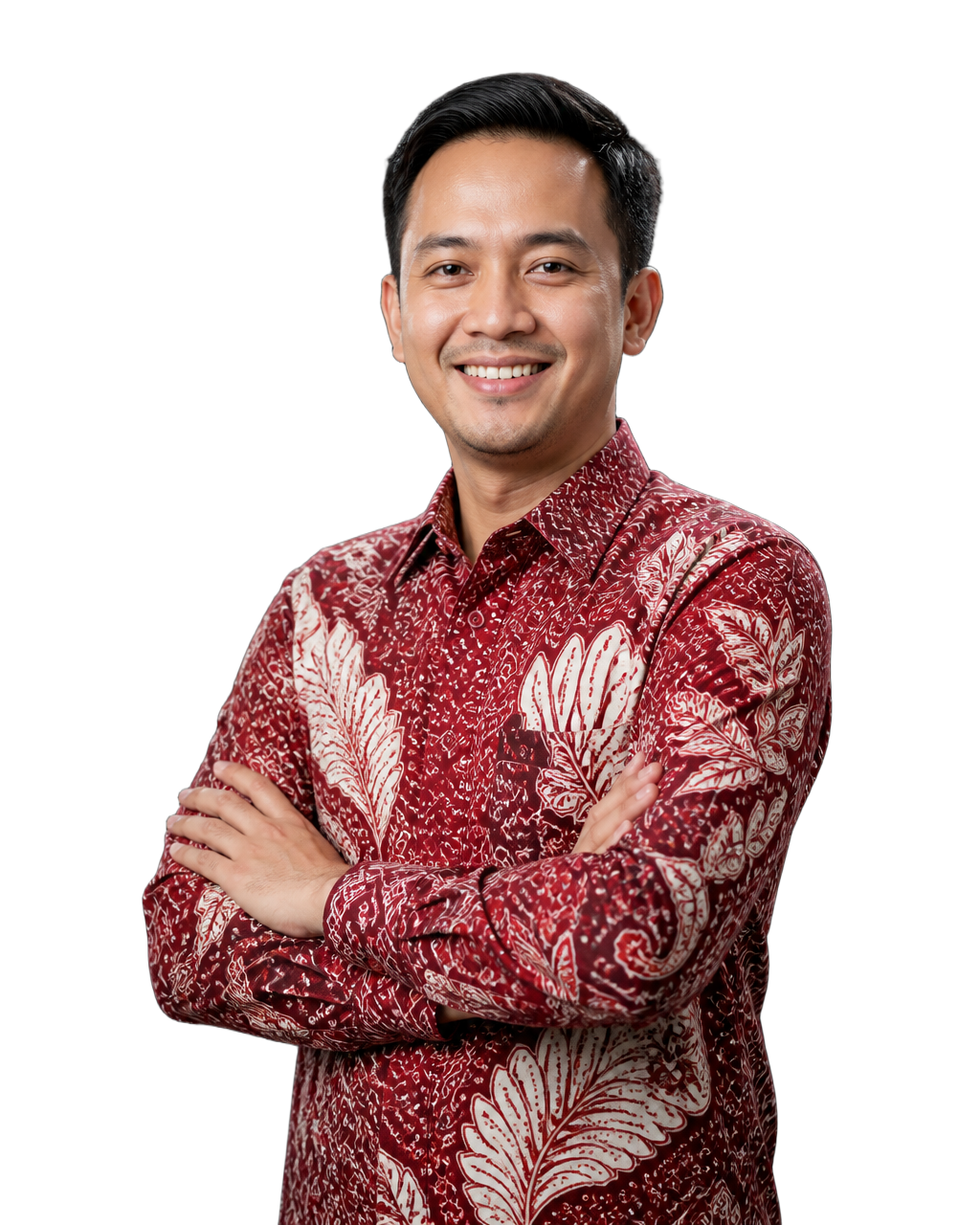
Asian manufacturing culture
Candidates raised on Japanese and Korean factory standards: shift work, 5S, quality control and safety procedures are second nature, not something to build from scratch.

 Recruitment from Indonesia
Manufacturing, welding, processing, warehousing and construction – candidates with BNSP certificates and experience from factories in Japan, South Korea and Taiwan. We run the whole process: job order legalisation, recruitment through a licensed P3MI agency, the work permit, visa and onboarding – usually in 4–6 months.
Indonesia · Southeast Asia
Indonesia has been sending workers to Japan, South Korea, Taiwan and Malaysia for decades. The result is a candidate market used to Asian work standards: shift systems, quality control, safety procedures and teamwork. Deployment is supervised by the state – recruitment runs through a licensed P3MI agency and the process is logged in the SISKOP2MI system.
This direction is chosen by production plants, shipyards and metal-industry companies, as well as food processing, warehousing and construction. Scale is a genuine advantage here – with enough lead time we will fill several dozen positions in a single batch. We run both formal tracks in parallel: one schedule, one budget, one coordinator.
4–6
months from contract to arrival
280 m
population – the world's fourth largest
BNSP
national competence certification system
100%
legal employment and residence
Other directions
We also recruit from Philippines, India, Nepal, .
See all directionsBenefits
Candidates raised on Japanese and Korean factory standards: shift work, 5S, quality control and safety procedures are second nature, not something to build from scratch.
The world's fourth most populous country with a very young population. One of the few directions where filling several dozen positions in a single batch is genuinely realistic.
The national BNSP competence certification system plus SMK vocational schools and BLK training centres. A certificate confirms a practical exam, not just course attendance.
Indonesia is an archipelago with a developed shipbuilding and maritime industry. Welders, steel structure fitters and mechanics have experience from real production plants.
A work culture based on respect for supervisors and avoiding confrontation. Indonesian teams are calm, cohesive and rarely leave mid-contract.
Deployment runs through a licensed P3MI agency, the process is registered in SISKOP2MI, and the worker completes mandatory training and is insured before departure.
Qualifications
The Indonesian qualification system is formalised and can be verified through documents. Every profile you receive includes a scan of the BNSP certificate or vocational diploma, employment references from previous contracts and a language assessment.
BNSP / LSP certificates
The national vocational competence certification system. The certificate is issued by an accredited LSP centre after a practical exam – for welders, machine operators, mechanics, electricians, cooks and hospitality staff. A document that can genuinely be verified.
SMK schools and BLK / LPK centres
SMK vocational secondary schools plus state BLK centres and private LPK schools run practical courses lasting several months. A certificate means hours spent at the machine, not just theory.
References from Japan, Korea and Taiwan
Records from the ginō jisshū programme (Japan), EPS (South Korea) and contracts in Taiwan, Malaysia and the Gulf – proof of work under quality regimes, in shifts and to the standards of Asian corporations.
The region of origin genuinely shapes the professional profile – we match it to the role.
West Java and Jakarta
The country's largest industrial hub – electronics, automotive, port logistics and manufacturing. Candidates with experience in multinational factories.
Central Java (Semarang, Cilacap)
Light industry, textiles, processing and crafts. The lowest cost of living in the country – a very large and stable supply of production candidates.
East Java (Surabaya, Malang)
Shipyards, heavy industry, welding and port logistics. Most technical candidates and welders come from here.
Sumatra and Lampung
Agriculture, plantations, food processing and construction. Candidates used to physical, seasonal and team-based work.
Sulawesi, Bali and Lombok
Fisheries and fish processing plus the hospitality and catering base, with better English and guest-service experience.
We run the process in six stages: consultation, quote and contract, legalisation of the job order at the Embassy of the Republic of Indonesia, recruitment through a P3MI agency, the Polish work permit, pre-departure training with the visa, and relocation. Each stage has a clear deadline and document set – below we show step by step what happens, how long it takes and who covers the costs.
4–6 mo.
from contract to the first day at work
6 stages
one coordinator runs the entire process
100%
compliance with authorities in Poland and Indonesia
Process stages
Needs analysis, role profile, quote and schedule. The process starts only once the contract is signed and the demand letter issued.
Consultation and needs analysis
Week 1We agree the scope of duties, required qualifications, pay, shift system and accommodation conditions.
Quote and schedule
Week 1–2We present the full budget, the timing of each stage and the planned arrival batches.
Contract and demand letter
Week 2The employer contract and the job order in English – the document that opens the entire procedure on the Indonesian side.
Legalisation of the demand letter and company documents at the Embassy of the Republic of Indonesia in Warsaw – without it the P3MI agency cannot start recruiting.
Legalisation at the Indonesian Embassy
Week 2–5The demand letter, power of attorney and company registration documents are legalised at the Embassy of the Republic of Indonesia in Warsaw.
Permit for the P3MI agency
Week 4–7The licensed agency applies for approval of the job order and registers it in the state SISKOP2MI system.
Sourcing and verifying candidates in Java, Sumatra and Sulawesi – experience, references, BNSP certificates and registration in SISKOP2MI.
Candidate pre-selection
Week 5–9Our partner sources candidates in Java, Sumatra and Sulawesi and verifies references from contracts in Japan, South Korea, Taiwan and the Gulf.
Shortlist and selection
Week 6–10We present a shortlist of verified profiles with BNSP certificates and a language assessment. The decision is yours; video interviews on request.
Documentation, labour market test and application at the voivodeship office – in parallel with recruitment in Indonesia.
Compiling documentation
Week 4–6Company data, employment terms and declarations – checked for compliance before submission.
Labour market test
Week 5–8Where the role requires it: posting the vacancy at the district labour office and obtaining the starosta's opinion.
Decision: type A permit
Week 6–14Application at the voivodeship office; a decision typically takes 30–60 days depending on the region.
Pre-departure orientation, migrant insurance, medical checks and the national D visa application in Jakarta.
Pre-departure training and insurance
Week 12–17Mandatory OPP orientation for migrant workers, insurance cover and finalising the contract in the state system.
Medical checks and visa application
Week 14–20Examinations at an accredited clinic, full document set, e-konsulat application and an appointment at the embassy in Jakarta.
Flights from Jakarta, accommodation, PESEL, bank account and onboarding at the workplace.
Tickets and transfer
Week 18–24Booking flights from Jakarta or Surabaya (usually via the Gulf or Istanbul), airport transfer and meeting the group with a coordinator.
Accommodation and registration
First weekHousing that meets sanitary requirements, address registration, PESEL application and a bank account.
Safety training and onboarding
First weekHealth-and-safety training with interpretation, pictograms at the workstation, an assigned buddy and first days under a foreman's supervision.
Support and 90-day review
Month 1–3Ongoing contact with the coordinator, support with residence matters and a review of the cooperation after three months.
Typical timeline
From contract to the first day of work – usually 3–5 months
Consultation, quote and contract
01Job order legalisation and P3MI permit
02Recruitment and pre-selection
03Type A work permit
04OPP training, medicals and D visa
05Arrival and first day at work
06Cost of employment
Official fees in Poland
EmployerType A work permit application, visa fee and the application centre's service fee.
Legalisation at the Indonesian Embassy
Employer / agencyLegalisation of the demand letter, power of attorney and company registration documents in Warsaw – an item specific to this direction.
Process on the Indonesian side
Employer / agencySISKOP2MI registration, mandatory pre-departure training, migrant insurance and the candidate's medical checks.
Flight and relocation
EmployerAir ticket from Jakarta or Surabaya, airport transfer, initial accommodation and starter equipment.
Onboarding and post-arrival support
Employer / agencyAddress registration, PESEL, bank account, safety training and coordinator support in the first months.
Agency fee
EmployerRecruitment, handling official procedures on both sides and coordinator support after arrival.
We do not quote a single price per worker – the budget depends on the role, headcount and region. It always consists of the same items, however, so you can compare agency offers without hidden costs. With Indonesia there is one element that is easy to overlook: legalisation of the demand letter at the embassy and the mandatory pre-departure training. We include both in the quote from the outset.
Ready to start
Industries
Indonesia is an industrial and maritime economy with a vast manufacturing base and well-developed vocational education. Below are the industries where this direction delivers the best results.
The strongest side of this direction. Indonesia is Asia's manufacturing backyard – candidates know line work, quality standards, visual inspection and shift discipline from plants producing for Japanese and Korean corporations.
An archipelago nation with shipyards in Batam, Surabaya and Jakarta. Welders and structural fitters have experience with strict safety regimes and large steel structures.
Southeast Asia's largest fisheries sector and extensive processing industry. Candidates are used to sanitary regimes, cold store work and repetitive processes.
The ports of Tanjung Priok and Tanjung Perak handle traffic for the entire archipelago, so warehouse, handling and forklift experience is genuine here.
Many candidates return from contracts in Malaysia, the UAE and Qatar – from sites with high safety requirements and demanding climates.
Seasonal and greenhouse work plus the tourism base of Bali and Lombok – cooks, kitchen assistants and housekeeping staff with chain-hotel experience.
Not every direction fits every plant. If you need candidates for customer-facing work or with very strong English, tell us at the start – the Philippines or Sri Lanka often work better there, while we use Indonesia where scale and a technical profile matter most.
Roles
The strongest side of this direction is manufacturing and technical roles in the broad sense: welders, structural fitters, machine operators and mechanics with BNSP certificates. Food processing, warehousing and construction work equally well. Video interviews with candidates are arranged at the employer's request.
Need candidates with very strong English or a shorter process? See also workers from the Philippines, workers from Sri Lanka or workers from India.
A comparison of typical differences in the process and candidate profile.
| Criterion | Indonesia | Other directions |
|---|---|---|
| Candidate profile | Manufacturing, welding, processing, warehousing and construction | More often unskilled roles with no technical base |
| Work culture | Asian – shift discipline, quality focus, low conflict | Varies by direction |
| Process duration | 4–6 months (embassy legalisation) | 1–4 months (visa-free directions) |
| Candidate availability | Very high – including groups of 50+ | Limited in smaller markets |
| Direction-specific formalities | Demand letter legalisation, P3MI agency and SISKOP2MI registration | Work permit or declaration |
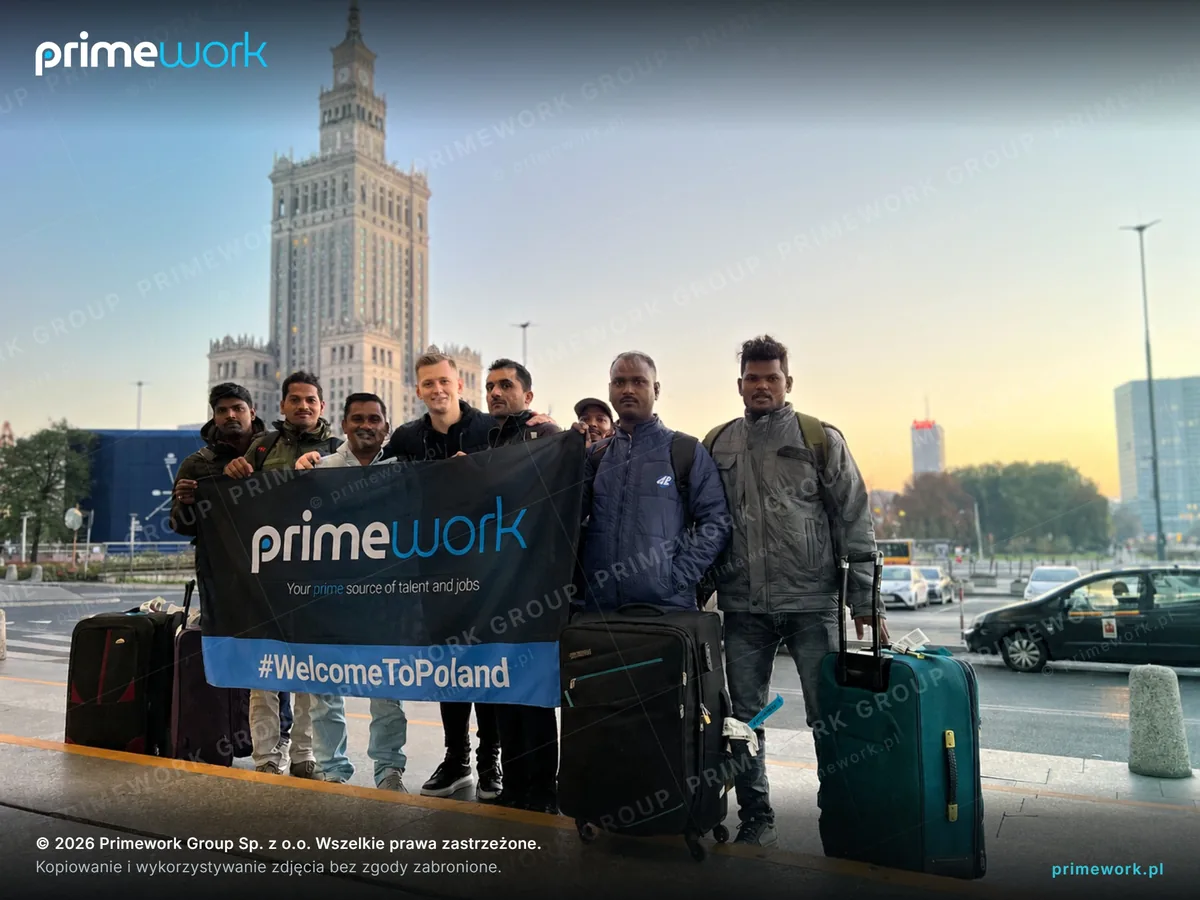
Cultural integration
Indonesian teams settle in calmly and fit into a company structure very quickly, but the first weeks decide whether a worker stays for years. A few simple organisational decisions shorten onboarding and noticeably reduce turnover in the first year.
Language and communication
English is usually basic, so instructions are best given in written and visual form. Pictograms at the workstation, a foreman-interpreter in each group and a basic Polish course solve this within weeks.
Halal food and prayer
Most candidates are Muslim. Access to their own kitchen, pork-free meals, a quiet prayer space and accounting for Ramadan and Eid al-Fitr in the roster cost very little and are key to retaining the team.
First winter and acclimatisation
Indonesia has an equatorial climate – a winter clothing pack, a briefing on weather and commuting, and coordinator support in the first weeks are essential here.
Indirect communication and feedback
In Indonesian culture direct, public criticism lands very badly, and "yes" is often politeness rather than confirmation of understanding. Feedback given in private and asking the worker to repeat instructions in their own words eliminates most misunderstandings.
Short answers to questions about recruiting workers from Indonesia.
Indonesia is the world's fourth most populous country, with a very young labour market and decades of experience sending workers to Japan, South Korea, Taiwan and the Middle East. Candidates are used to disciplined Asian production systems – shift work, quality standards and health-and-safety procedures are nothing new to them. Add very low conflict levels and strong loyalty to the employer, and staff turnover drops noticeably.
1) Needs analysis, quote and contract together with a demand letter (job order), 2) legalisation of the demand letter at the Embassy of the Republic of Indonesia in Warsaw, 3) recruitment through a licensed P3MI agency and registration of the process in the SISKOP2MI system, 4) type A work permit at the voivodeship office, 5) medical checks, pre-departure orientation (OPP), migrant insurance and a national D visa in Jakarta, 6) arrival, accommodation, registration, PESEL number and onboarding.
Realistically 4–6 months from signing the contract to the first day at work. Longer than the Philippines or Nepal, because the demand letter must be legalised at the Indonesian diplomatic mission and the process registered on the KP2MI side. With larger groups the stages overlap, so subsequent batches arrive faster.
KP2MI (formerly BP2MI) is the state institution protecting Indonesian migrant workers. P3MI is a licensed recruitment agency – the only entity allowed to legally deploy a worker abroad – and SIP2MI is the permit issued to it for a specific job order. The whole process is logged in the SISKOP2MI system. For the employer this means one thing: the contract is registered by the state, and the worker completes mandatory training and is insured before departure.
The native language is Bahasa Indonesia. English is usually basic to conversational – noticeably better among candidates from hospitality, the merchant navy and previous overseas contracts. We assess the level during the interview and describe it in the candidate profile, and for groups we appoint a foreman who acts as an interpreter. Indonesians learn languages quickly – Bahasa Indonesia is grammatically simple, so basic Polish comes easier than most employers expect.
The backbone is the BNSP competence certification system issued by accredited LSP centres, plus training at state BLK centres and private LPK schools. On top of that come welding certificates, shipyard qualifications, SMK vocational school diplomas and references from contracts in Japan (ginō jisshū), South Korea (EPS), Taiwan and the Gulf. We verify every document before presenting a candidate.
Manufacturing and electronics, welding and shipbuilding, food and fish processing, warehousing and logistics, hospitality and catering, and construction. Indonesia has a huge industrial and maritime base, so candidates with genuine production-line or welding experience are available in large numbers.
The budget consists of official fees in Poland (type A work permit, visa and service fees), costs on the Indonesian side (embassy legalisation of the demand letter, SISKOP2MI registration, OPP training, medical checks, insurance), the flight from Jakarta and the agency fee. We present an exact calculation for the specific role and headcount in the offer before we start – with no hidden items.
Yes. Pay and all other terms of employment must be no worse than for Polish employees in comparable roles – this is a condition for issuing the work permit and is checked by the Labour Inspectorate and Border Guard.
Accommodation provided by the employer or the agency is the standard. We arrange flights from Jakarta, airport transfer, housing that meets sanitary requirements, address registration, PESEL number and a bank account. We also advise on cultural essentials: access to their own kitchen, pork-free meals, a quiet prayer space and accounting for Ramadan and Eid al-Fitr in the roster – small organisational details that build strong team loyalty.
Indonesia offers a very large pool of industrial candidates with an Asian work culture and experience from Japan, Korea and Taiwan – a production and technical profile, not just unskilled labour. In exchange the process takes longer than the Philippines, because the job order must be legalised at the Indonesian embassy. English is weaker than in the Philippines or Sri Lanka, so for customer-facing work those directions fit better.
Within the agreed trial period we provide a free replacement. Throughout the contract one coordinator looks after your company and the team, resolving issues before they turn into turnover.
Direction: IndonesiaWe start with a conversation about your needs, a quote and a contract. Only then do we launch job order legalisation, recruitment through a P3MI agency, the work permit and the visa – with an agreed arrival schedule.
Realistic time from contract to the first day at work: 4–6 months.