The largest candidate availability
Close to one million people leave Bangladesh every year for contracts abroad. Even large demand – 50 people or more for one role – can be filled without stretching the schedule.

 Recruitment from Bangladesh
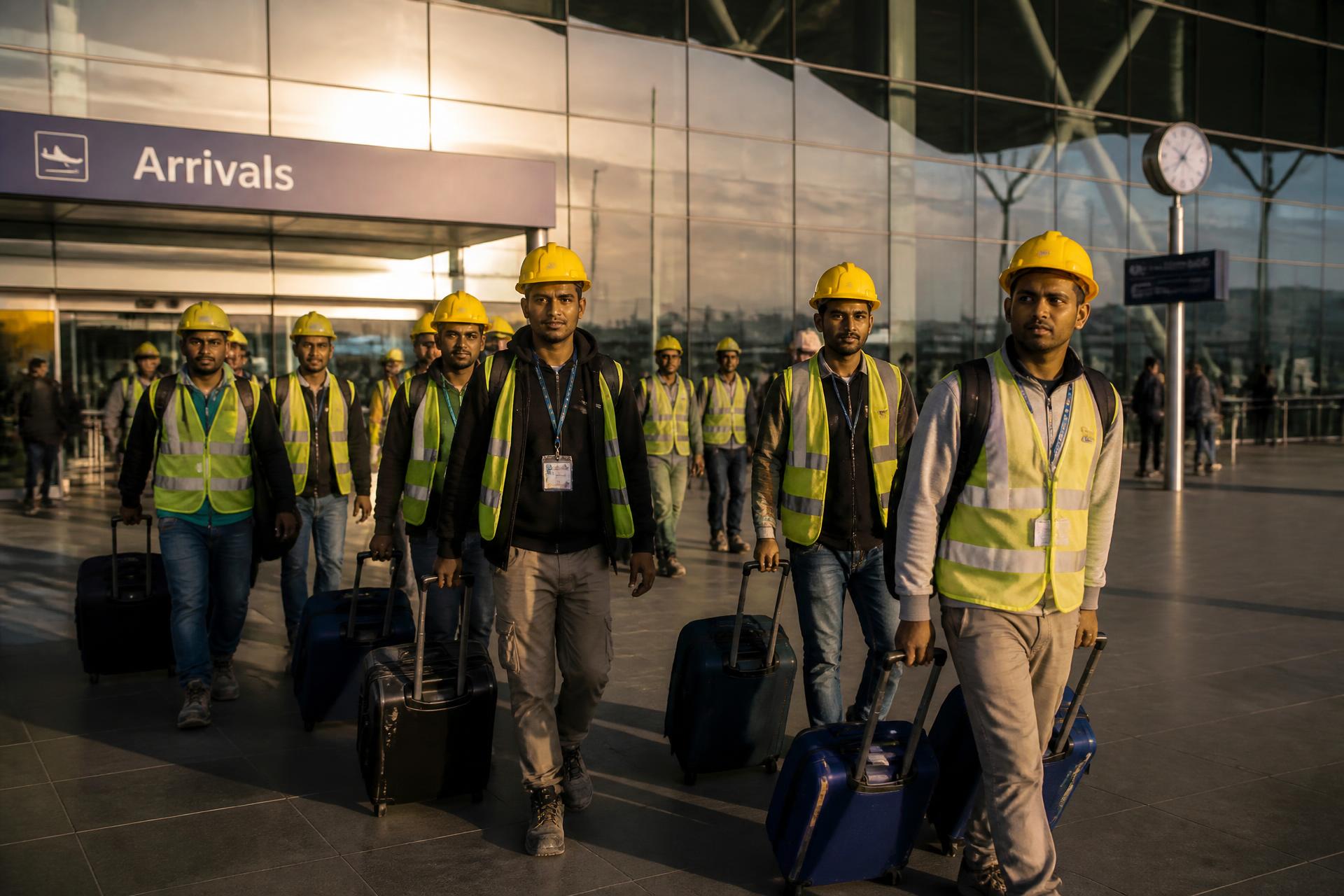
Sewing rooms, production, warehousing, construction and welding – candidates with experience from Saudi Arabia, the UAE, Qatar and Malaysia, from the largest labour export market in South Asia. We run the whole process: recruitment in Dhaka, the work permit, document attestation, the visa and onboarding – usually in 4–6 months.
Bangladesh · South Asia
Employment abroad is an organised, state-supervised system in Bangladesh: close to one million people leave every year for contracts in Saudi Arabia, the UAE, Qatar, Malaysia and Singapore. For a Polish employer that means two things – a very large pool of candidates with real industrial experience and a clear, repeatable procedure.
This direction is chosen above all by plants that need to fill dozens of positions at once: sewing rooms and upholstery, production, warehouses and construction. The price of that scale is a slightly longer process – besides the Polish work permit you need document attestation in Dhaka, and the candidate files the visa application at the Polish Embassy in New Delhi. We run both tracks in parallel: one timeline, one budget, one coordinator.
4–6
months from contract to arrival
100%
legal employment and residence
~1 m
labour departures every year
1–4
NSDA certificate levels
Other directions
We also recruit from Philippines, India, Nepal, .
See all directionsBenefits
Close to one million people leave Bangladesh every year for contracts abroad. Even large demand – 50 people or more for one role – can be filled without stretching the schedule.
The world's second largest garment exporter. Sewing machine operators, upholsterers and quality controllers bring years of real machine work, not just training.
The shipyard region trains welders and steel structure fitters working on genuine industrial jobs – with credentials we verify against documents.
Candidates arrive planning a multi-year contract and support for their family back home. That translates into a stable crew all year round.
English is a compulsory subject and Gulf returnees use it at work. Instructions and safety briefings in English work from day one.
If a worker does not meet expectations during the trial period, we provide a free replacement.
Qualifications
The Bangladeshi qualification system is formalised and verifiable against documents. Every profile you receive includes a scan of the diploma or certificate, work certificates from previous contracts and an assessment of the English level.
BTEB
Bangladesh Technical Education Board – the national vocational education system. A BTEB diploma is the basic proof of technical education for electricians, mechanics, construction technicians and machine operators.
NSDA certificates (levels 1–4)
The National Skills Development Authority confirms genuine occupational competence after a practical exam: welding, industrial tailoring, electrical installations, machine operation. The level maps directly onto the role a candidate suits.
References from the Gulf, Malaysia and Singapore
Work certificates from Saudi Arabia, the UAE, Qatar, Malaysia and Singapore – proof of working under strict safety rules, on shifts and to the output standards of large plants.
The region of origin genuinely shapes the occupational profile and language – we match it to the role.
Dhaka and Gazipur
The largest garment and light production hub – sewing machine operators, quality control, technical staff and logistics.
Chattogram
Shipyards, ship-breaking and heavy industry – welders, steel structure fitters, locksmiths and industrial electricians.
Sylhet
The region with the longest labour migration tradition – candidates with hospitality, catering and retail experience, often with better English.
Rajshahi, Rangpur and Cumilla
Agriculture, food processing and manual work – candidates used to seasonal and team-based work.
We run the process in five stages: call, quote and contract, recruitment in Dhaka, the Polish work permit, document attestation, the D visa filed in New Delhi and relocation. Each stage has a clear timeframe and a complete document set – below we show step by step what happens, how long it takes and who covers the costs.
4–6 mo.
from contract to first day of work
6 stages
one coordinator manages the whole process
100%
compliance with Polish and Bangladeshi requirements
Process stages
Needs analysis, role profile, quote and timeline. The process starts once the contract is signed and the demand letter issued.
Call and needs analysis
Week 1We define the scope of duties, required credentials, pay, shift system and accommodation conditions.
Quote and timeline
Week 1–2We present the full budget, the timing of each stage and the planned arrival batches.
Contract and demand letter
Week 2The employer contract and the demand letter in English – the document that opens the procedure on the Bangladeshi side.
Sourcing and verification by a licensed partner, checking experience, references and BTEB/NSDA certificates.
Pre-selection with a licensed partner
Week 2–4Our partner in Dhaka sources candidates and verifies references from Gulf, Malaysian and Singaporean contracts.
Presentation and candidate choice
Week 3–5We present a shortlist of verified profiles. The decision is yours. Video interviews on request; practical tests in Dhaka are a paid add-on.
Documentation, labour market test and the application at the voivodeship office – in parallel with recruitment in Bangladesh.
Compiling documentation
Week 3–4Company data, employment conditions and statements – checked for compliance before filing.
Labour market test
Week 4–7Where the role requires it: posting the vacancy at the district labour office and obtaining the starosta's opinion.
Decision: type A permit
Week 4–12Application at the voivodeship office; a decision typically takes 30–60 days depending on the region.
Full document set, medical checks and the candidate's trip to New Delhi – applications from Bangladeshi citizens are handled by the Polish Embassy in India.
Document attestation and medical checks
Week 10–16Demand letter and contract attested in the required form, passport, medical examination at an accredited clinic and the documents required by the consulate.
Trip to New Delhi and visa filing
Week 14–22Applications from Bangladeshi citizens are handled by the Polish Embassy in New Delhi. We plan the appointment, Indian visa, travel and accommodation and prepare the candidate for the visit.
Flights from Dhaka, accommodation, PESEL, bank account and onboarding on the job.
Tickets and transfer
Week 20–24Flight booking from Dhaka (usually via the Gulf), airport transfer and group pick-up by the coordinator.
Accommodation and registration
First weekHousing that meets sanitary requirements, address registration, PESEL application and a bank account.
Safety training and onboarding
First weekSafety training and instructions in English, an assigned buddy on the floor and first days supervised by the team leader.
Care and a 90-day review
Month 1–3Ongoing coordinator contact, support with residence matters and a cooperation review after three months.
Typical timeline
From contract to the first day of work – usually 3–5 months
Call, quote and contract
01Recruitment and pre-selection in Dhaka
02Type A work permit
03Document attestation and medicals
04National D visa in New Delhi
05Arrival and first day of work
06Cost of employment
Official fees in Poland
EmployerType A work permit application, visa fee and the application centre service fee.
Bangladeshi procedure
Employer / agencyDocument attestation and exit formalities handled by our licensed partner in Dhaka.
Candidate documents and medicals
Employer / agencyCompiling the documents required by the office and consulate plus medical checks at an accredited clinic in Dhaka.
Visa trip to New Delhi
EmployerIndian visa, travel, accommodation and support for the candidate while filing the visa application in India – an item specific to this direction.
Flight and relocation
EmployerFlight ticket from Dhaka, airport transfer, initial accommodation and starter kit.
Agency fee
EmployerRecruitment, running the official process on both sides and coordinator support after arrival.
We do not quote a single price per worker – the budget depends on the position, headcount and region. It always consists of the same items, however, so you can compare agency offers without hidden costs. Bangladesh adds two elements that are easy to forget: the document attestation in Dhaka and the candidate's trip to New Delhi to file the visa application. We include both in the quote from the very beginning.
Ready to start
Sectors
Bangladesh is the world's second largest garment exporter and one of the biggest contract labour markets – candidates bring real machine experience, shift work and output norms. Below are the sectors where this direction delivers the best results.
The strongest side of this direction. Candidates have several years at the machine in garment factories in Dhaka and Chattogram – they know output norms, quality control and piece-rate work.
Shift work, repeatable processes and assembly lines – Bangladeshi workers are used to a production regime and pick up safety standards quickly.
Order picking, loading and scanner work. They perform where consistency and pace matter and communication runs on simple English and pictograms.
Many candidates have completed contracts in Saudi Arabia, the UAE and Qatar – sites with demanding safety requirements and a tough climate.
The Chattogram region hosts one of the world's largest shipbuilding and ship-breaking hubs – a real source of experienced welders and structural fitters.
This direction works best for group hiring: 10, 20 or 50 people for one plant. A group settles in faster, and an English-speaking foreman acts as the link to management.
Not every direction fits every plant. If you need strictly technical staff with certified qualifications, tell us upfront – we will match the country and candidate profile to the specific role.
Positions
The strongest side of this direction is light industry – sewing rooms, upholstery and light production – plus roles that reward consistency: warehousing, processing and construction. Technical profiles with NSDA certificates are also available, including welders from the Chattogram region. Practical tests are arranged in Dhaka on request as a paid add-on.
Looking for technical staff with welding credentials? See also workers from India or workers from Nepal.
A comparison of typical differences in the process and candidate profile.
| Criterion | Bangladesh | Other directions |
|---|---|---|
| Candidate profile | Light industry, textiles, production, construction and welding | More often narrow technical specialisations |
| Candidate availability | Very high – groups of 20–100 people are easy to fill | Limited for large demand |
| Process duration | 4–6 months | 1–4 months (visa-free directions) |
| Specific formalities | Document attestation and the D visa filed in New Delhi | Permit or declaration |
| English level | Basic to good, depending on region | Varied |
Cultural integration
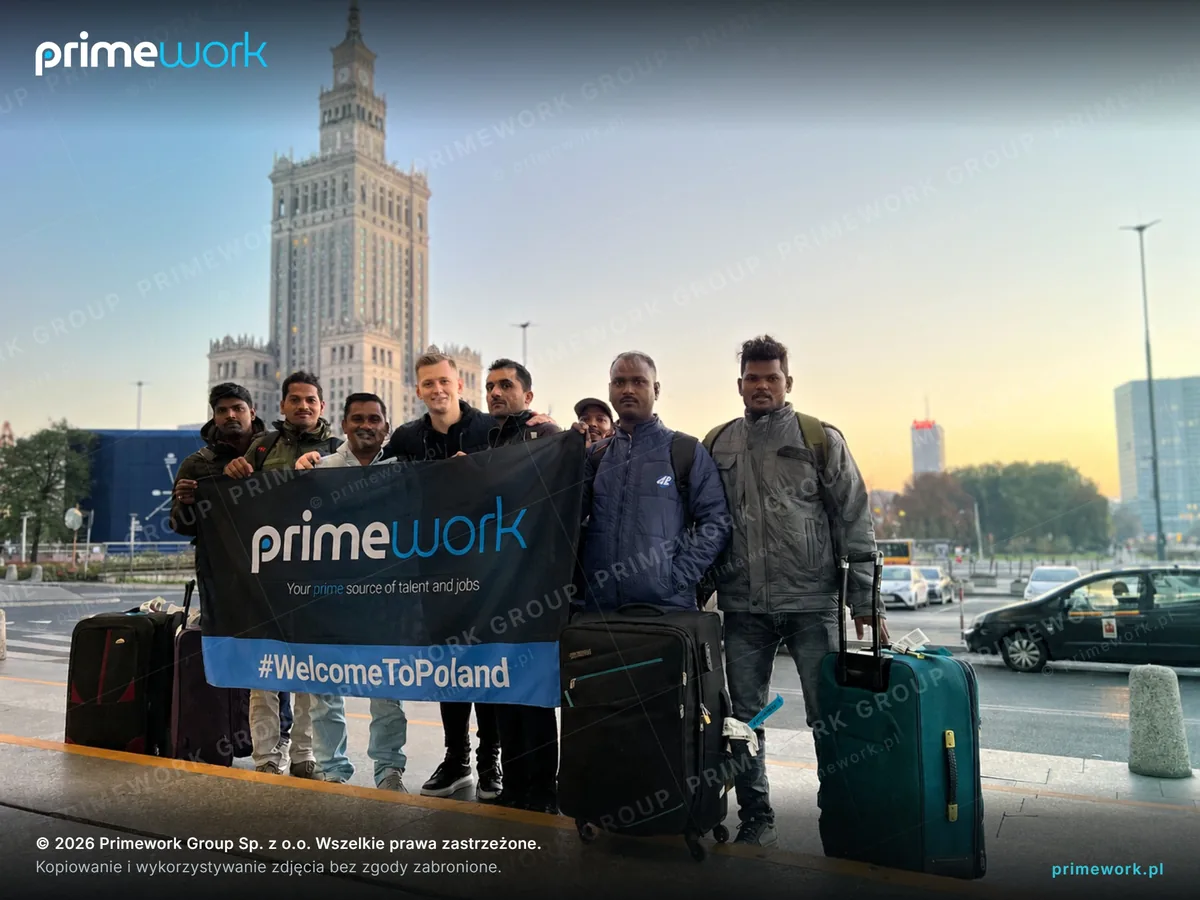
Bangladeshi teams settle in quickly and work well in larger groups, but the first weeks decide whether a worker stays for years. A few simple organisational decisions shorten onboarding and visibly reduce first-year turnover.
Language barrier on the floor
Basic Polish courses, instructions and safety briefings in English, pictograms and an interpreter team leader in every larger group.
Halal meals and Ramadan
Halal options in the canteen, access to a kitchen and a flexible roster during Ramadan and Eid – the simplest way to onboard the team smoothly.
First winter and acclimatisation
A winter clothing package, a briefing on weather and commuting, and coordinator support during the first weeks after arrival.
Family contact and finances
Help with opening a bank account and cheap transfers to Bangladesh plus stable internet at the accommodation – this measurably reduces turnover.
Short answers to questions about recruiting workers from Bangladesh.
Bangladesh is one of the world's largest labour-export markets – close to one million people leave every year for contracts in Saudi Arabia, the UAE, Qatar, Malaysia and Singapore. For a Polish employer that means a very large pool of candidates used to shift work, output targets and strict safety rules. The strongest advantage of this direction is light and textile industry: Bangladesh is the world's second largest garment exporter, so candidates for sewing rooms, upholstery and light production have years of real machine experience.
1) Needs call, quote and contract with the employer including a demand letter, 2) pre-selection by a licensed partner in Dhaka – verification of experience, references and BTEB/NSDA certificates, 3) type A work permit at the voivodeship office, 4) document attestation in Dhaka and medical checks, 5) national D visa – applications from Bangladeshi citizens are handled by the Polish Embassy in New Delhi, 6) flight from Dhaka, accommodation, registration, PESEL number and onboarding at the plant.
Realistically 4–6 months from signing the contract to the first day of work. The longest stages are the work permit (usually 30–60 days), document attestation in Dhaka and the visa appointment in New Delhi. With larger groups the stages overlap, so later batches arrive faster.
National visa applications from citizens and residents of Bangladesh are handled by the Polish Embassy in New Delhi together with VFS Global application centres. The candidate therefore has to travel to India to submit documents and biometrics. We plan this stage upfront: appointment, Indian visa, transport, accommodation and the full document set – this is where inexperienced agencies most often lose weeks.
Above all light and textile industry (sewing machine operators, upholsterers, quality control), production and food processing, warehousing and logistics, construction and finishing work, and welding – Chattogram hosts one of the world's largest shipbuilding and ship-breaking hubs, which trains experienced welders and steel structure fitters.
English is a compulsory school subject in Bangladesh and the language of instruction on technical courses, and candidates returning from Gulf contracts use it on sites and production floors. Levels vary – we always verify it during the interview and describe it in the candidate profile. For larger groups we appoint a team leader with stronger English who acts as an interpreter.
The base is the BTEB system (Bangladesh Technical Education Board) and NSDA certificates at levels 1–4 issued after a practical exam – for welders, electricians, mechanics, tailors and machine operators. On top of that come work certificates from contracts in Saudi Arabia, the UAE, Qatar and Malaysia. We verify qualifications against documents before presenting a candidate; practical tests in Dhaka are arranged on request as a paid add-on.
The budget consists of official fees in Poland (type A work permit, visa fee, VFS service fee), the Bangladeshi procedure (document attestation, medicals), the candidate's trip to New Delhi for the visa, the flight from Dhaka and the agency fee. We present an exact calculation for the specific role and headcount before the start – with no hidden items.
Yes. Pay and other employment conditions must be no worse than for Polish employees in a comparable role – this is a condition for issuing the work permit and a point checked by the labour inspectorate and Border Guard.
Accommodation provided by the employer or the agency is the standard. We arrange flights from Dhaka, airport transfer, housing that meets sanitary requirements, address registration, a PESEL number and a bank account. We also suggest simple cultural solutions: access to a kitchen, halal meal options, a prayer space and accounting for Ramadan and Eid in the roster.
Within the agreed trial period we replace the worker free of charge. Throughout the contract one coordinator supports the company and the team, reacting to issues before they turn into turnover.
Direction: BangladeshWe start with a needs call, a quote and a contract. Only then do we launch recruitment in Dhaka, the work permit, document attestation and the visa in New Delhi – with an agreed arrival schedule.
Realistic time from contract to first day of work: 4–6 months.