
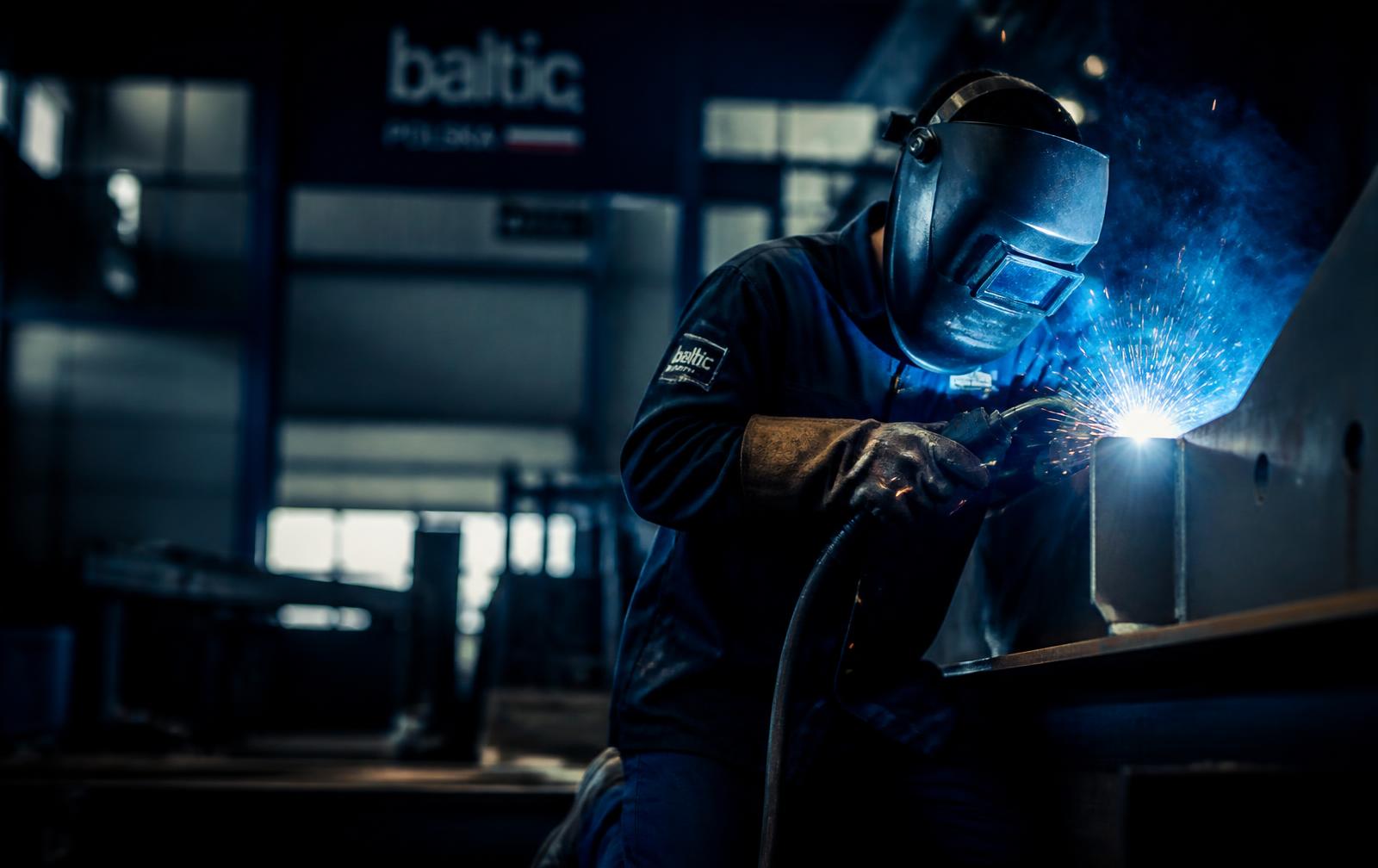
Welders from Asia – MIG/MAG and TIG
We recruit MAG, MIG, TIG and stick electrode welders as well as fitters and structural steel metalworkers for Polish welding shops, fabrication plants and machinery manufacturers. We run the full path: a practical welding test before departure, work legalisation, an EN ISO 9606-1 examination at a Polish centre, housing and running-in on your WPS.
- Processes 135, 131, 141, 111 and 136 – matched to your job card
- Welding coupon with visual assessment before the candidate flies
- Qualification exam in Poland and a complete certification file
- Permanent recruitment, temporary work or an outsourced crew
- Scale
- from 4 to 150+ people
- Start
- 3–6 months
- Processes
- MAG · MIG · TIG
- Qualifications
- EN ISO 9606-1
- Guarantee
- Worker replacement
Welding is the hardest role to staff in industry today
Polish steel fabrication plants and manufacturers of machinery, tanks and rolling stock have not filled their welding bays from the domestic market for years. Asian markets – above all the Philippines and Vietnam – have a strong welding tradition and candidates experienced in heavy industry and shipyards.
4–150+
welders and fitters in a single contract
3–6 months
from contract to the first weld in production
EN ISO 9606-1
qualification exam at a Polish welding centre
135 · 141 · 111
MAG, TIG and stick electrode, plus 131 and 136
The challenges plants bring to us
Welding is the number one shortage trade
Welders have topped shortage-occupation rankings for years. The domestic market does not fill welding bays, and turnover pushes rates up faster than contract margins.
Contracts wait for welding capacity
The bottleneck is not cutting or machining, it is the number of torches. One unstaffed bay can delay the shipment of an entire structure.
Weld quality and rework cost
Defects, repeats and repairs after NDT cost more than any difference in hourly rate. That is why our selection is based on a coupon, not a CV claim.
Plant certification requirements
Working under EN 1090, PED or shipyard regimes demands current qualifications for a specific range. An expired certificate removes a welder from the bay overnight.
Who we recruit for welding shops
Most projects concern MAG welders in plain steel, but we equally staff TIG work in stainless and aluminium plus the whole shop support chain – from marking out to post-weld finishing.
MAG welders (135)
Plain steel, steel structures, frames, brackets and machine parts – the most frequently staffed group in Polish welding shops.
TIG welders (141)
Stainless steel, aluminium, thin walls, pipework and tanks – welds that demand a clean face and full root penetration.
MIG welders (131)
Aluminium and light alloys: bodies, trailers, industrial structures and transport components.
Stick electrode welders (111)
Assembly work, heavy structures, repairs and field welding where gas shielding is impractical.
Flux-cored welders (136)
Thick plate, heavy structures and high deposition rates in plants running multiple shifts.
Fitters and structural assemblers
Marking out, assembling and tack welding to drawing, joint preparation and fit-up before final welding.
Grinders and post-weld finishing
Weld dressing, spatter removal, surface preparation for painting and galvanising, and visual inspection support.
Cutting and preparation operators
Plasma, gas, band saws and press brakes – the shop support that keeps welding stations running.
Processes, positions and materials
No welder is universal – the process, position and material decide. We agree the range before sourcing so the pre-departure test mirrors real work at your station.
Welding processes
135 (MAG), 131 (MIG), 141 (TIG), 111 (stick electrode), 136 (flux-cored). Process and plate range are set in the job card before sourcing begins.
Welding positions
PA, PB, PC, PD, PE plus out-of-position PF, PG, PH and PJ. Candidates are tested in exactly the position they will work in for you.
Materials
Structural steel S235–S355, fine-grained steels, stainless and acid-resistant steel, aluminium and alloys. Stainless and aluminium mean a narrower candidate pool.
Joint types
Plate and profile work, butt and fillet joints, pipe and flange welding, pressure vessels and structures welded on site.
Quality control
Visual assessment (VT) on every test and, for critical projects, penetrant, radiographic or ultrasonic testing of the exam coupon.
Technical documentation
We work to your WPS and WPQR. Candidates receive a simplified bilingual version before the Polish examination.
Welding qualifications and the exam in Poland
A certificate issued outside the EU does not transfer automatically to a Polish station. We treat it as evidence of skill and close the formal side with an exam in Poland – before the welder touches your parts.
What we do before departure
- Verification of existing certificates and work history
- Practical test in the target process, position and material
- Visual assessment of the coupon, with NDT where needed
- Technical interview and video call with your welding engineer
What we close after arrival
- EN ISO 9606-1 examination at a Polish welding centre
- Welder's logbook and a certificate covering your WPS range
- Medical checks, safety training and workstation instruction
- A register of validity dates and renewals
Three engagement models
The model depends on how much HR responsibility you want to keep in house. They can be combined – a core welding team employed directly and contract peaks covered by temporary work.
Permanent recruitment
The welder is employed directly by you. We handle selection, the welding test, legalisation, the Polish exam and the first weeks in production.
One-off recruitmentTemporary work
Employment sits with us, giving you flexible welding capacity for the length of a contract, settled per hour worked.
Temporary Work AgencyOutsourced welding crew
We take over a defined production scope together with a foreman and responsibility for staffing and output.
OutsourcingA welding test instead of a CV claim
A coupon decides, not a résumé. The filter is agreed before the project starts and applied identically in every country so candidates are compared on one measure.
Our recruitment filter
- Documented experience in the process and material you need
- Practical test in the required position, with video and face/root photos
- Visual (VT) assessment of the coupon, plus NDT on critical projects
- Ability to read technical drawings and weld symbols
- Eyesight and medical checks for welding station work
- Communicative English and readiness for shift work
What we agree on your side
- Job card: process, positions, material and thickness range
- WPS and the quality standards used to assess coupons
- Required weld quality level and scope of NDT
- Shift system, output norms and housing standard
- Who provides welding supervision and workstation instruction
- Scope of video calls between your engineer and candidates
Legalisation and employment compliance
Documents are the longest part of the schedule, so we run them in parallel for the whole group rather than candidate by candidate. We operate under a KRAZ certificate and contracts compliant with Polish labour law.
Type A work permit
The application covers a specific welding role, with a labour market test where required and the plant location taken into account.
National visa and entry
We compile visa documents, book appointments at consulates and coordinate the group's flights and airport pickup.
Residence card and legal stay
After arrival we run the temporary residence and work permit application, registration and notifications to the authorities.
Welder qualification file
Welder's logbook, EN ISO 9606-1 certificate, qualification range, medical checks and safety training – ready for a notified body audit or a labour inspection.
More detail in our residence and work legalisation and type A work permit services.
The first weeks in production
The first month decides whether a welder stays – the exam, running in on your parts and clear feedback on weld quality.
Day 0 – arrival and housing
Airport pickup, transport to accommodation near the plant, SIM cards, first shopping and a briefing in the worker's language.
Week 1 – documents and exam
Medical checks, initial safety training, workwear and PPE, followed by the qualification exam at a welding centre for your range.
Week 2–3 – running in on the WPS
Work under a foreman on your parts and parameters, ongoing weld quality checks and technique corrections.
Month 2–3 – stabilisation
A report for the plant: station output, defect and rework levels, absence. The coordinator supports workers with official and daily matters.
How a project for a welding plant runs
01 · Welding shop and bottleneck review
We map processes, materials, positions, part sizes, the number of stations to fill and a realistic start date.
02 · Job card and batch schedule
A welder profile with the WPS range and a batch plan. Deadlines are counted backwards from the day the torches must be running.
03 · Sourcing and welding test
Parallel channels in the Philippines and Vietnam, one selection filter, welding coupons with VT assessment and video calls with your welding engineer.
04 · Work legalisation
Type A permits, visa applications and full documentation run in parallel for the whole group.
05 · Arrival, exam and logistics
Tickets, airport pickup, accommodation, transport to the plant and the EN ISO 9606-1 qualification exam.
06 · Onboarding and support
Running in on your WPS, a coordinator for the group, quality and staffing reports and a replacement guarantee.
Where we source welders
The country is matched to the process, material, language requirements and deadline. On larger contracts we source in two or three countries at once.

Philippines
The strongest welding market: shipyard and Middle East contract experience and very good English.

Vietnam
A deep pool of MAG and TIG welders from industrial manufacturing, high precision and low turnover.

India
The largest candidate volumes, structural and pipeline welders with petrochemical experience.

Indonesia
Structural fitters and welders from industrial plants and shipyards, strong on heavy structures.

Nepal
Welders and metalworkers focused on long contracts, with high availability for shift work.

Sri Lanka
Welders and post-weld finishing staff, disciplined and stable in employment.
Risks we eliminate up front
Welding projects fail for a handful of recurring reasons. Each is addressed before the recruitment campaign starts.
The welder fails the Polish exam
The pre-departure test mirrors exam conditions, using the same position and material. Centre dates are booked before arrival and retake attempts are built into the project.
Weld quality drops after the first weeks
The first month is covered by visual inspection and a defect report, so changes in parameters, equipment or parts are caught before they affect shipments.
Expired qualifications
We keep a register of certificate validity and renewals so a welder never drops out of the bay mid-contract or jeopardises an audit.
Disappointment with conditions after arrival
Rates, shift system, output norms and housing standards are explained before departure – the main reason for early departures from a plant.
Frequently asked questions about welders from Asia
Which welders can you recruit?
MAG (135), MIG (131), TIG (141), stick electrode (111) and flux-cored (136) welders. Alongside them we staff structural steel fitters and metalworkers, grinders, markers-out and welding shop support roles.
Where do the welders come from?
Mostly the Philippines and Vietnam – the two strongest welding markets, with candidates experienced on shipyard and Middle East contracts. We also recruit in India, Indonesia, Nepal and Uzbekistan.
Are welding certificates from Asia recognised in Poland?
Qualifications issued outside the EU do not transfer automatically. We treat them as evidence of skill, then send the welder for an EN ISO 9606-1 examination at a Polish welding centre before production work – which gives you a welder's logbook and a certificate valid for your WPS.
How do you verify skills before departure?
As standard we do not run practical tests. On client request we can arrange an optional paid practical test in the candidate's country: a joint in the required position and material, completed against the clock, with video, face and root photographs and a visual (VT) assessment. For critical projects we can add non-destructive testing of the coupon as a paid add-on.
Can the welders handle out-of-position work?
The range of positions – from PA and PB to PF, PH and PJ – is set in the job card and we test exactly the position you need. Candidates without a confirmed position are never placed on a job that requires it.
How long from contract to the first weld?
Realistically 3–6 months. Selection with the welding test takes 3–5 weeks, the work permit and visa 3–4 months, and after arrival the qualification exam, health and safety training and running-in on your WPS take another 2–4 weeks.
Who pays for exams and additional qualifications?
Scope and cost split are written into the contract. Usually Primework arranges the centre, dates and logistics and the exam cost is built into the per-worker calculation – so you do not pay separately for every attempt.
Do you cover stainless steel and aluminium?
Yes. For stainless and aluminium we place TIG and MIG welders with confirmed experience in those materials. That is a narrower candidate pool, so we plan such projects with more lead time than plain-steel MAG work.
What about plants working under EN 1090 or PED?
We work to your system: the welder must hold a current certificate covering the WPS range, and welding supervision stays on your side. We deliver documented qualifications and track renewal dates.
What language do welders use with the foreman?
Communicative English is the standard and is usually very good among Filipino workers. Drawings, WPS and instructions are prepared bilingually, and for groups of 10 or more we provide a coordinator speaking the workers' language.
Can we start with a small group?
Yes, and we usually recommend it. A first batch of 4–8 welders lets you verify weld quality on your own parts, pace and communication before we scale the volume.
What if a welder cannot hold weld quality?
A replacement guarantee is written into the contract. In practice we first check whether the issue lies with parameters or equipment, then move the worker to fitting and assembly tasks and send in another candidate.
We will staff your welding stations.
We reply within 48 hours with a recommended sourcing market, a welding test plan and a full per-worker cost calculation – with no obligation.