
Russian as the working language
Candidates speak Russian fluently, so they join Ukrainian, Belarusian and Moldovan teams without a silent period. That cuts weeks off onboarding.

 Recruitment from Kazakhstan
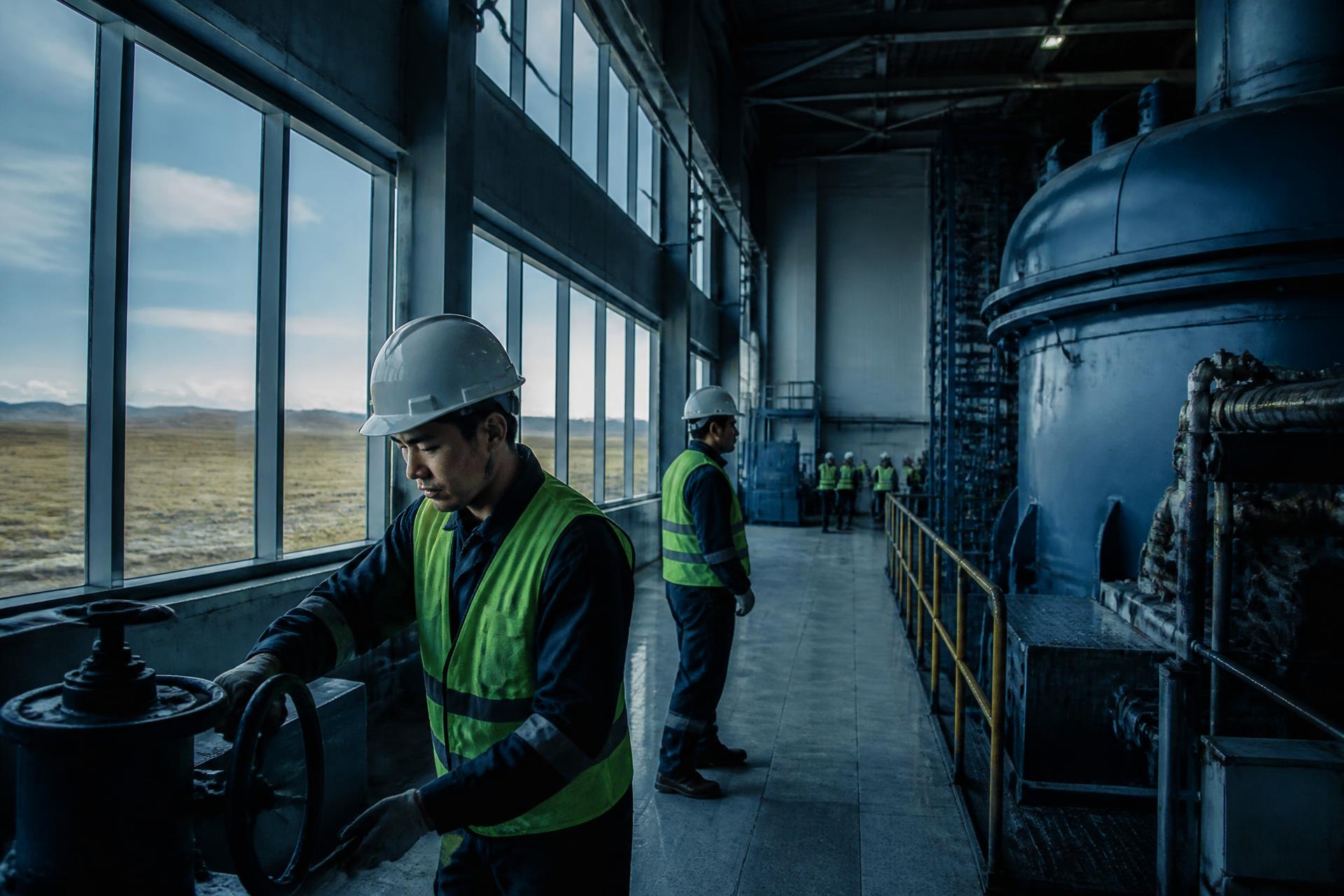
Construction, manufacturing, logistics, transport and agriculture – candidates with genuine industrial experience and fluent Russian, which shortens onboarding in mixed teams. We run the entire process: sourcing, labour market test, type A permit, national D visa and relocation – usually in 2.5 to 4 months.
Kazakhstan · Central Asia
Kazakhstan is the largest economy in Central Asia, built on mining, energy, metallurgy and processing. Candidates come from large plants, continuous shift systems and a harsh climate – from below −30 °C to hot summers. For a Polish employer that means a workforce that copes with conditions and already knows heavy-industry safety rules.
The biggest and most underrated advantage of this direction is language. Russian is spoken everywhere in Kazakhstan, so candidates slot straight into teams that already include Ukrainian, Belarusian or Moldovan workers. Supervisors communicate from day one and workstation instructions need only one extra language version.
Kazakhstan is not covered by the simplified declaration route, so we run the full path: labour market test, type A work permit and a national D visa at the consulate in Almaty or Astana. That is longer than Georgia, but shorter and cheaper than Asian directions requiring embassy legalisation of documents.
2.5–4
months from contract to first day at work
20 m
people – the largest market in Central Asia
RU
Russian as the working language of the team
100%
fully legal employment and residence
Other directions
We also recruit from Philippines, India, Nepal, .
See all directionsBenefits
Candidates speak Russian fluently, so they join Ukrainian, Belarusian and Moldovan teams without a silent period. That cuts weeks off onboarding.
Metallurgy, mining, energy and processing – shift work, continuous operation and safety procedures are everyday reality for these candidates, not something new.
Polish winters are no challenge here. Candidates from northern and central regions work in temperatures far lower than anything Poland offers.
Vast distances and the China–Europe transit corridor mean a large pool of experienced professional drivers and warehouse staff.
Technical college diplomas, welding and operator licences – the documents are readable and can be checked before a candidate is presented.
Kazakhstan is a secular country with moderate Islam. Organisational requirements are minimal and cultural distance is far smaller than with Asian directions.
Qualifications
The Kazakhstani vocational education system is formalised and can be checked on documents. Every profile you receive includes a scan of the diploma or certificate, professional licences, employment records from previous plants and an assessment of Russian and English levels.
College and technical school diplomas
Vocational colleges train machine operators, fitters, electricians, welders and mechanics. The programme includes placements in industrial plants, so a graduate does not start from zero at the machine.
Industry licences and safety training
Welding and operator licences plus safety training issued by employers in the mining and energy sector. Where needed we confirm them with a practical exam in Poland.
Employment records and references
We verify service in specific plants: steelworks, mines, factories and transport companies. We also check earlier foreign contracts in Russia, Türkiye and South Korea.
C+E licence and code 95
A Kazakhstani licence does not allow professional haulage in the EU. We plan the exchange after the residence card is issued, plus initial qualification and the code 95 entry – in parallel with legalisation, to avoid losing weeks.
The region of origin genuinely shapes the professional profile – we match it to the role.
Almaty and Almaty region
The country's largest urban area: manufacturing, logistics, construction and services. Best candidate availability and the shortest route to the Polish consulate.
Shymkent and the south
The region with the highest unemployment and the strongest willingness to relocate. Construction, agriculture, processing and manual work.
Astana and the centre
Structural construction, installations and infrastructure – candidates with experience on large urban investment projects.
Karaganda and Temirtau
Metallurgy, mining and the metal industry. Most welders, fitters and heavy machinery operators come from here.
West: Aktobe and Atyrau
The oil and gas sector – maintenance, industrial mechanics and work under strict safety rules in rotation systems.
We run the process in five stages: call, quote and contract; sourcing and pre-selection in Kazakhstan; labour market test and type A permit; national D visa at the consulate; relocation and onboarding. Every stage has a clear deadline and document set – below you can see step by step what happens, how long it takes and who covers the cost.
2.5–4 months
from contract to first day at work
5 stages
one coordinator runs the whole process
100%
compliance with Polish authority requirements
Etapy procesu
Needs analysis, job profile, quote and schedule. The process starts once the contract is signed and the job description approved.
Call and needs analysis
Week 1We agree the scope of duties, required licences, pay, shift system and accommodation standard.
Quote and schedule
Week 1–2We present the full budget, stage deadlines and planned arrival batches.
Contract and job description
Week 2Contract signature and approval of the Russian-language job description – the document that triggers sourcing.
Sourcing and verification in Almaty, Shymkent, Astana and Karaganda – experience, licences and Russian language level.
Candidate pre-selection
Week 2–5Our local partner sources candidates and verifies employment records, licences and references from industrial plants.
Shortlist and selection
Week 4–6We present a shortlist with licences and language assessment. Video interviews are arranged on request.
Governor's statement where required, and the type A work permit application at the voivodeship office.
Labour market test
Week 3–6Where the role requires it: the vacancy is filed with the county labour office and the governor's statement obtained.
Decision: type A permit
Week 5–13Application at the voivodeship office; a decision typically takes 30–60 days depending on the region.
Appointment booking, full document set, medical checks and insurance, then the visa application in Almaty or Astana.
Appointment and visa documents
Week 10–14System registration, full document set, medical checks and travel insurance for the candidate.
National D visa application
Week 12–17Application filed at the Polish consulate in Almaty or Astana and passport collection with the visa.
Flight, airport transfer, accommodation, PESEL number, bank account and onboarding at the workstation.
Tickets and transfer
Week 14–18Flight booking from Almaty, Astana or Shymkent, airport transfer and group pick-up by the coordinator.
Accommodation and registration
First weekHousing that meets sanitary requirements, address registration, PESEL application and a bank account.
Safety training and onboarding
First weekHealth and safety training with Russian translation, workstation instructions, a buddy in the team and first days under supervision.
Support and 90-day review
Month 1–3Ongoing contact with the coordinator, support with residence matters and a review of the cooperation after three months.
Typowy harmonogram
Od umowy do pierwszego dnia pracy – zwykle 3–5 miesięcy
Call, quote and contract
01Sourcing and pre-selection in Kazakhstan
02Labour market test and type A permit
03Medical checks, documents and national D visa
04Arrival and first day at work
05Koszty zatrudnienia
Polish administrative fees
EmployerType A work permit application and administrative charges at the voivodeship office.
Visa and service fee
Employer / agencyConsular fee for the national D visa and the application centre fee in Almaty or Astana.
Translations and documents
Employer / agencySworn translations of diplomas, licences and employment records, medical checks and candidate insurance.
Flights and relocation
EmployerAir ticket from Almaty, Astana or Shymkent, airport transfer, initial accommodation and starter equipment.
Drivers: licence exchange and code 95
Employer / agencyApplies to professional drivers only: licence exchange, initial qualification and the code 95 entry in Poland.
Agency fee
EmployerSourcing, handling the administrative and consular process and coordinator support after arrival.
We do not quote a single price per worker – the budget depends on the role, headcount and region. It always consists of the same items, so you can compare agency offers without hidden costs. With Kazakhstan two things matter: the visa procedure requires a consular appointment, and for drivers there is the licence exchange and code 95. Both are included in the quote from day one.
Gotowi do startu
Industries
Kazakhstan is an industrial and resource economy with a well-developed vocational education system. Below are the industries where this direction delivers the best results.
The investment boom in Astana and Almaty has produced a large pool of construction workers, from shell and core to finishing and installations. Candidates know work at height and safety standards on large sites.
Metallurgy in Karaganda and Temirtau plus processing plants supply machine operators, fitters and welders used to continuous operation and quality control.
Kazakhstan is the China–Europe transit corridor, so professional drivers and warehouse staff have real experience with long routes and terminal handling.
The oil and gas sector in the west trains mechanics, electricians and maintenance staff used to rotation systems and strict safety rules.
The north is a grain belt with large-scale mechanised work. Candidates know agricultural machinery, seasonal work and crop processing.
Large distribution centres in Almaty prepare candidates for target-based, shift work with scanners – exactly the profile Polish retail warehouses need.
If you need candidates with strong English for customer-facing work, the Philippines or Sri Lanka usually work better. We use Kazakhstan where industrial experience and a shared language with a Russian-speaking team matter most.
Roles
The strongest side of this direction is technical and construction roles: welders, fitters, machine operators, maintenance mechanics and construction workers. Warehousing, transport and agriculture work equally well. Video interviews with candidates are arranged at the employer's request.
Need a faster process or candidates who travel visa-free? See also workers from Georgia, workers from Türkiye or workers from the Philippines.
A comparison of typical differences in the process and candidate profile.
| Criterion | Kazakhstan | Other directions |
|---|---|---|
| Candidate profile | Heavy industry, construction, transport and agriculture | More often light manufacturing and basic roles |
| Working language | Russian – shared with Eastern European teams | Basic English or no shared language |
| Legal basis | Type A permit and national D visa | Employer declaration (Georgia) or full procedure with legalisation |
| Process time | 2.5–4 months | 3–6 weeks (Georgia) or 4–6 months (Asia) |
| Acclimatisation | Very good – a harsher climate than Poland | Winter clothing pack and longer adaptation needed |
Cultural integration
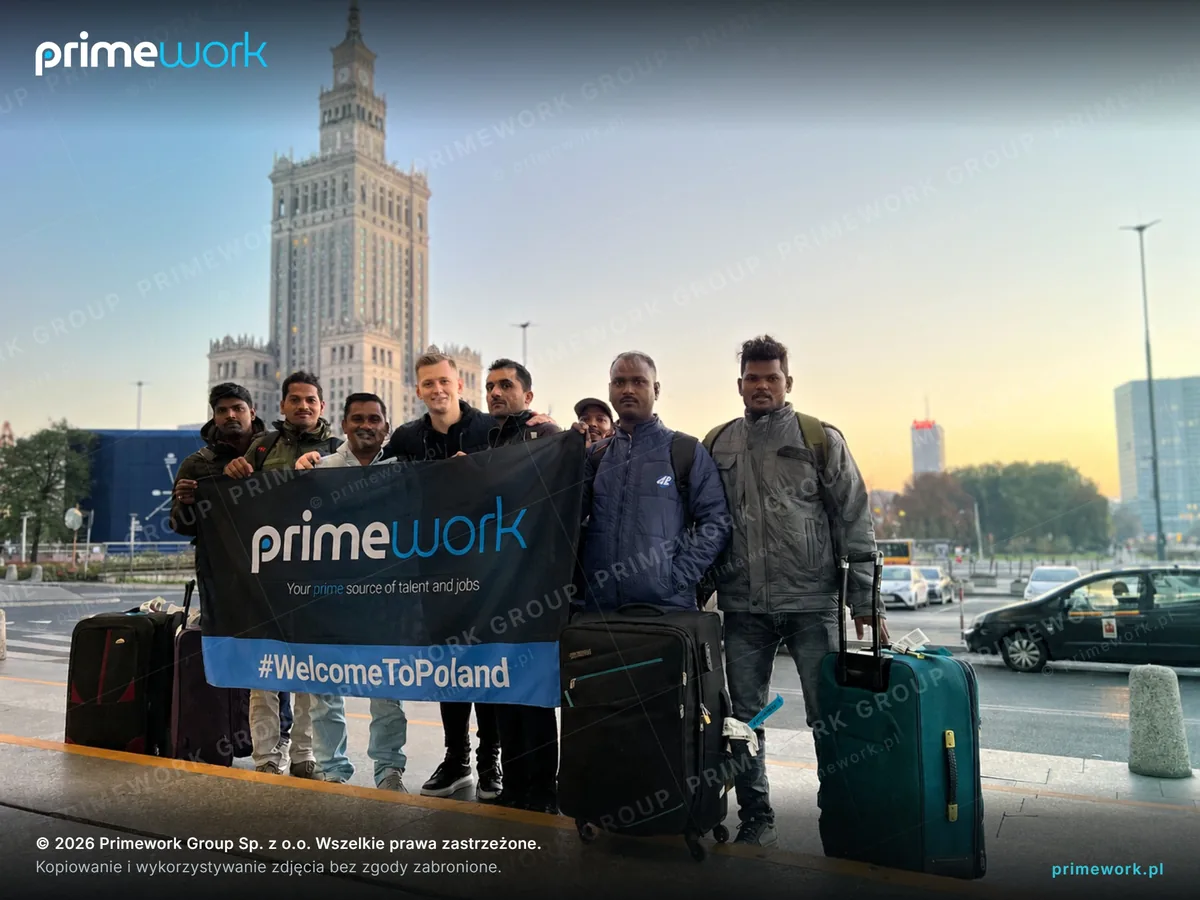
Teams from Kazakhstan settle in exceptionally fast because the two biggest barriers – language and climate – simply disappear. What remains is a handful of organisational matters worth setting up at the start; get them right and the first year passes without turnover.
Russian yes, Polish only on arrival
Shared Russian solves communication inside the team, but documents, training and dealings with authorities are in Polish. Bilingual workstation instructions and a basic Polish course after shifts close the gap within weeks.
Moderate Islam and Ramadan
Kazakhstan is secular, but part of the team fasts during Ramadan and avoids pork. A canteen alternative and flexibility in the roster during that period cost little and mean a great deal.
Residence and banking formalities
Registration, PESEL, a bank account and the residence card application dominate the first weeks. The coordinator books the appointments and tracks the deadlines so legal residence never lapses.
Flight logistics and the first days
Flights from Kazakhstan usually connect via Istanbul or the Gulf, so the group arrives tired and across time zones. One acclimatisation day before the first shift is the best-invested 24 hours in the whole process.
Short answers to questions about recruiting workers from Kazakhstan.
Direction: KazakhstanWe start with a conversation about your needs, a quote and a contract. Only then do we launch sourcing, the labour market test, the type A permit and the national D visa – with an agreed arrival schedule.
Realistic time from contract to first day at work: 2.5 to 4 months.