
Simplified procedure
A declaration at the district labour office instead of a type A permit, with no labour market test and no governor's statement. Only the visa procedure remains, and we run it for the candidate.

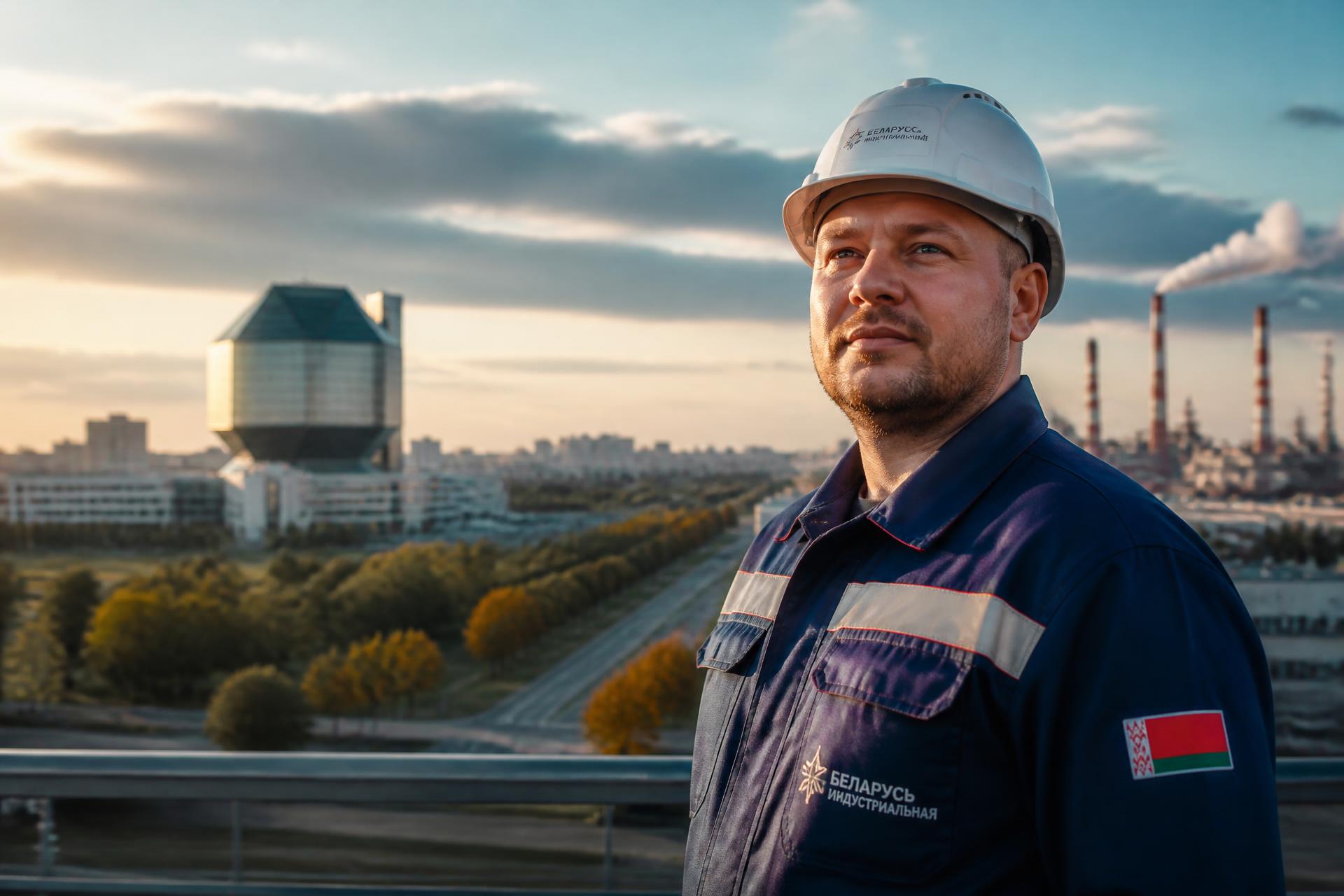
 Recruitment from Belarus
Belarus is an industrial origin right across the border: the simplified declaration procedure, no labour market test, a low language barrier and candidates experienced in large manufacturing plants. We handle recruitment, the declaration, the national D visa, transport and accommodation.
Belarus · Eastern Europe
Belarus has for years been one of the geographically closest sources of workers for Polish companies. The border is a few hours' drive from Minsk, Grodno and Brest, so candidates travel by coach rather than by plane — and can go home for leave just as easily. For the employer this means lower relocation costs and the option to schedule arrivals in batches.
The basis for employment is the declaration on entrusting work to a foreigner, registered with the district labour office. Belarus is one of the countries covered by this simplified route, so neither a type A permit nor a labour market test is required. There is one important difference against Ukraine: Belarusian citizens do not travel visa-free, so a national D visa is necessary.
The professional profile is distinctly industrial. The Belarusian economy is built on metalworking, machinery and tractor manufacturing, food processing, furniture production and international transport. Candidates hold vocational college diplomas, welding and operator certificates and practical experience in continuous-process plants where quality standards and shift work are routine.
The language barrier is low — Belarusian and Russian are Slavic languages, and in the Grodno and Brest regions many candidates know Polish from home, school or previous work in Poland. A significant share hold the Pole's Card, which shortens formalities further. On-the-job induction usually requires neither an interpreter nor a dedicated team leader.
4–8
weeks from decision to the first day at work
1
administrative procedure – declaration instead of a permit
24 months
maximum work period on a declaration
100%
legal employment and residence
Other directions
We also recruit from Philippines, India, Nepal, .
See all directionsBenefits
A declaration at the district labour office instead of a type A permit, with no labour market test and no governor's statement. Only the visa procedure remains, and we run it for the candidate.
Belarusian and Russian are close to Polish, and in the Grodno and Brest regions many candidates already speak Polish. Health and safety training and workstation instructions need no interpreter.
Machinery and tractor manufacturing, metalworking, food processing and furniture production. Candidates know the machine park, technical documentation and three-shift operations.
Several to a dozen hours by road from Minsk, Grodno or Brest. Groups can be brought in stages and transport costs are a fraction of air tickets from Asia.
Many candidates have already worked in Polish plants or have family in Poland. They know the employment reality, the paperwork and employer expectations, so induction is short.
After the declaration the natural next step is a single permit for residence and work, and with the Pole's Card even permanent residence. The result is low turnover and a stable team over the years.
Qualifications
Each candidate profile includes scanned professional documents, an employment history at named plants, references, an assessment of Polish language skills and — for technical trades — documentation of a practical skills test.
College and technical lyceum diplomas
The Belarusian vocational system is based on colleges with mechanical, electrical, construction and food-industry profiles. We verify documents and arrange sworn translations where needed.
Welding and operator certificates
We check the scope of certificates and welding methods, and for welders we arrange weld samples with visual assessment. EN ISO 9606-1 examinations and UDT authorisations are completed on the Polish side.
Employment history and references
We verify work at specific plants — from machinery factories to processing facilities — and confirm references from Polish employers by phone.
Driving licence, code 95 and the Pole's Card
For drivers we check the category, seniority and route history, then handle the licence exchange, initial qualification, code 95 and the driver card application. We separately verify the Pole's Card, which shortens formalities.
The region of origin genuinely shapes the candidate's professional profile.
Minsk and Minsk region
The largest pool of industrial candidates: machine building, metalworking, electronics and logistics. Experience in large continuous-process plants and shift work.
Grodno and Grodno region
Closest to the Polish border and with the highest share of Polish speakers and Pole's Card holders. Manufacturing, food processing, construction and services.
Brest and Brest region
The base of international transport and cross-border logistics. C+E drivers, warehouse staff, forklift operators and furniture plant workers.
Gomel and Gomel region
Heavy industry, metallurgy and agricultural machinery. Welders, fitters, machine tool operators and maintenance mechanics with large-factory practice.
Vitebsk and Mogilev
Textiles, dairy and meat processing and building materials production. High readiness to relocate and solid production line experience.
Candidates already in the European Union
People with a valid residence basis in Poland or another EU country, often holding a PESEL number and experience with a Polish employer. The fastest route – no visa procedure.
We run the process in five stages: consultation, quote and contract; recruitment and pre-selection; the declaration at the labour office; the national D visa and arrival; accommodation and onboarding. For Belarus the whole path usually fits within 4 to 8 weeks.
4–8 weeks
from decision to the first day at work
5 stages
one coordinator runs the whole process
100%
compliance with the foreign employment act
Etapy procesu
Needs analysis, role profile, quote and schedule. Once the contract is signed we begin recruiting.
Consultation and needs analysis
Day 1–2We agree the scope of duties, required certificates, pay and the accommodation standard.
Quote and schedule
Day 2–3We present the full budget, stage deadlines and planned arrival batches.
Contract and role description
Day 3Signing the contract and approving the role description that later goes into the declaration.
Sourcing candidates in Minsk, Grodno, Brest and Gomel – certificates, experience, Polish language skills, Pole's Card.
Candidate pre-selection
Day 3–10We verify certificates, diplomas, employment history and references, including from Polish employers.
Shortlist and online interviews
Day 7–14We present candidate profiles with a language assessment. A practical test is available only as an optional paid add-on on client request. We run interviews with your participation.
Registration of the declaration with the district labour office via praca.gov.pl. No labour market test and no governor's statement.
Declaration at the labour office
Day 10–20Registration of the declaration on entrusting work and entry into the labour office register.
Complete documentation, an appointment at the Polish consular office, insurance and transport across the border crossing.
Documents and consular appointment
Day 18–35Complete visa documentation, booking the appointment at the Polish consular office and preparing the candidate for the interview.
National D visa and transport
Day 35–50Visa collection, insurance, coach ticket and transfer across the border to the accommodation.
Accommodation, address registration, PESEL, written contract, social security registration, medical checks and safety training.
Contract, social security and medical checks
First weekWritten contract in a language the worker understands, social security registration, medical examinations and safety training.
Induction and 90-day review
Month 1–3A buddy in the team, supervised first days, coordinator support and a review of the cooperation after three months.
Typowy harmonogram
Od umowy do pierwszego dnia pracy – zwykle 3–5 miesięcy
Consultation, quote and contract
01Recruitment and candidate pre-selection
02Declaration and entry into the labour office register
03Visa documentation and consular appointment
04Arrival, accommodation and the first day at work
05Koszty zatrudnienia
Declaration fee
EmployerThe fee for filing the declaration on entrusting work with the district labour office.
National D visa and consular handling
Employer / agencyVisa fee, document translations and preparing the candidate for the consular appointment.
Cross-border transport
Employer / agencyCoach or minibus travel from Minsk, Grodno or Brest and the transfer to the accommodation. No air tickets involved.
Accommodation
EmployerA flat or lodging meeting sanitary requirements, utilities and starter equipment.
Medical checks, safety training and insurance
Employer / agencyMedical examinations, health and safety training and insurance for the journey and first days of the stay.
Certificates and examinations in Poland
Employer / agencyFor welders, operators and drivers: EN ISO 9606-1 examination, UDT authorisations, licence exchange, code 95 and the driver card.
Agency fee
EmployerRecruitment, handling the declaration, the visa procedure and residence legalisation, plus coordinator support after arrival.
Belarus is cheaper than overseas origins because there are no air tickets and no multi-month consular path, but more expensive than Ukraine by the cost of the visa. The single biggest factor in the schedule is the availability of appointments at the Polish consular office – we plan them in parallel with registering the declaration so no weeks are lost.
Gotowi do startu
Industries
This origin is the right choice when the role requires technical certificates, autonomy and communication within the crew. The low language barrier means induction takes days, not weeks.
Machine operators and line staff from machinery factories, metal plants and furniture works. Shift work, output standards and technical documentation are familiar from Belarusian plants.
The strongest specialisation of this origin, rooted in machine building in Minsk and Gomel. MIG/MAG and TIG welders, CNC operators and steel structure assemblers.
Candidates with site experience in Belarus, Poland and the Baltic states: structures, finishing works, electrical and sanitary installations.
A strong international transport base in the Brest region: C+E drivers with European routes and warehouse crews working in WMS systems.
Dairy and meat processing plus large-scale agriculture. Agricultural machinery operators, cold store, sorting plant and processing facility staff.
Candidates with hotel and restaurant experience, often after previous work in Poland. Guest contact in Polish is realistic after a short induction.
Belarus works excellently for technical roles and medium-sized groups. To staff an entire shift with one homogeneous team, consider the Philippines or Uzbekistan in parallel.
Positions
This origin delivers the best results in roles that require certificates: welding, metalworking, maintenance, construction and transport. For technical trades we can arrange an optional practical test as a paid add-on on client request.
Considering other origins? See also workers from Ukraine, workers from Georgia or workers from Kazakhstan.
A comparison of typical differences in the process and candidate profile.
| Criterion | Belarus | Other origins |
|---|---|---|
| Legal basis | Declaration on entrusting work at the labour office | Type A permit and national D visa (Asia, Africa) |
| Lead time | 4 to 8 weeks | 1 to 3 weeks (Ukraine) or 4 to 6 months (Philippines, Kenya) |
| Visa | National D visa – consular appointment required | Visa-free travel (Ukraine, Georgia) or a long consular procedure |
| Language | Linguistic proximity – induction without an interpreter | Working English or a dedicated crew leader required |
| Professional profile | Industry, metalworking, machinery, transport | Mass production and line work (South Asia) |
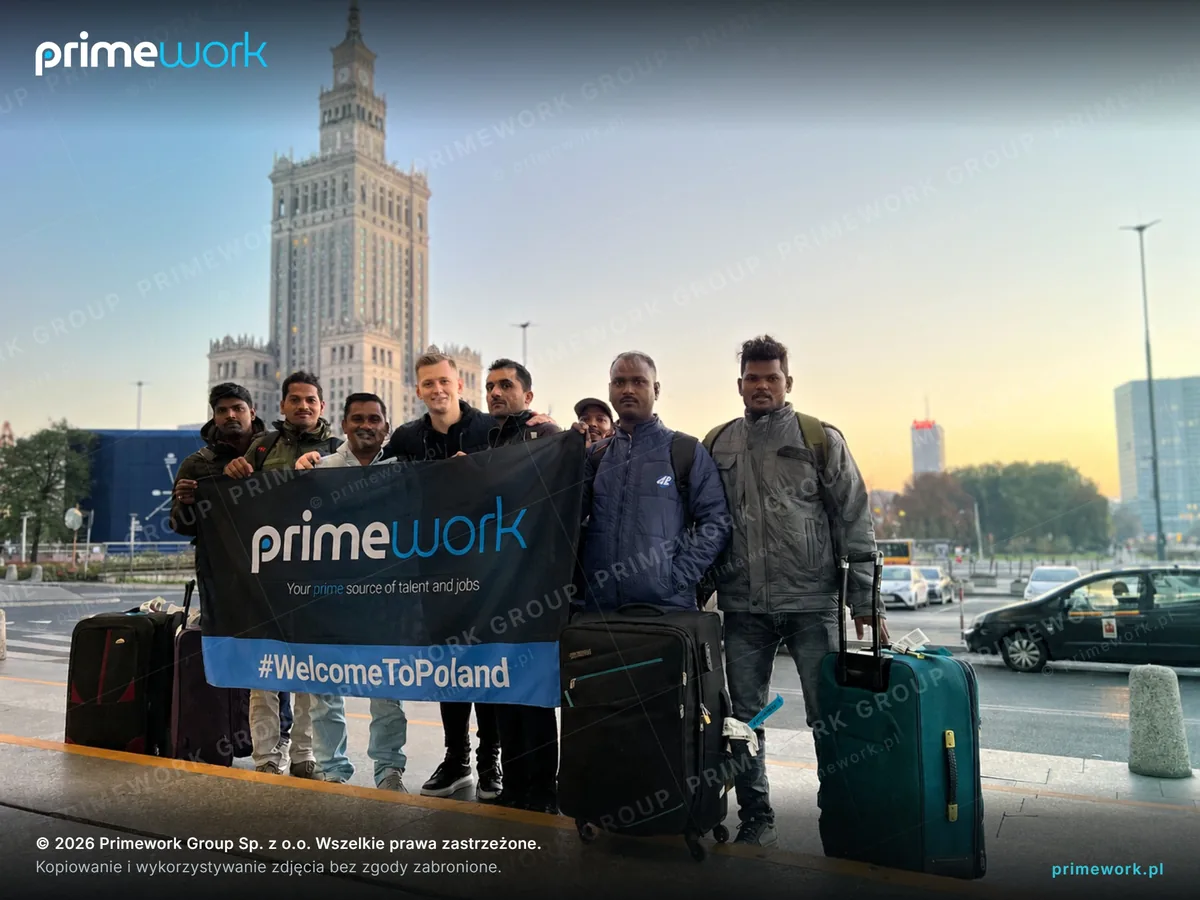
Cultural integration
Teams from Belarus settle in very quickly, but a few things are worth setting up from the start. Below are four factors that in practice decide whether the first year passes without turnover.
Language: close, but not identical
Similar languages can be misleading – near-identical words sometimes mean different things. Workstation instructions in two versions and a short glossary of technical terms remove misunderstandings in the first weeks.
Residence and banking formalities
D visa, address registration, PESEL, bank account and, for longer employment, the single permit application. The coordinator tracks deadlines so legal residence and employment never lapse.
Family and border crossings
A short journey means frequent trips home, but queues at border crossings can be unpredictable. A predictable leave schedule and a time buffer for the return trip genuinely reduce absence.
Stability and competition for candidates
Employers from Poland, Lithuania and Czechia compete for the same people. Payments on time, a good accommodation standard and a clear pay progression path are the most effective retention tools.
Short answers to questions about recruiting workers from Belarus.
Origin: BelarusWe start with a conversation about your needs, a quote and a contract. Only then do we launch recruitment, the declaration at the labour office, the visa procedure, transport and accommodation.
Realistic time from decision to the first day at work: 4 to 8 weeks.